Tooth Anatomy Explained
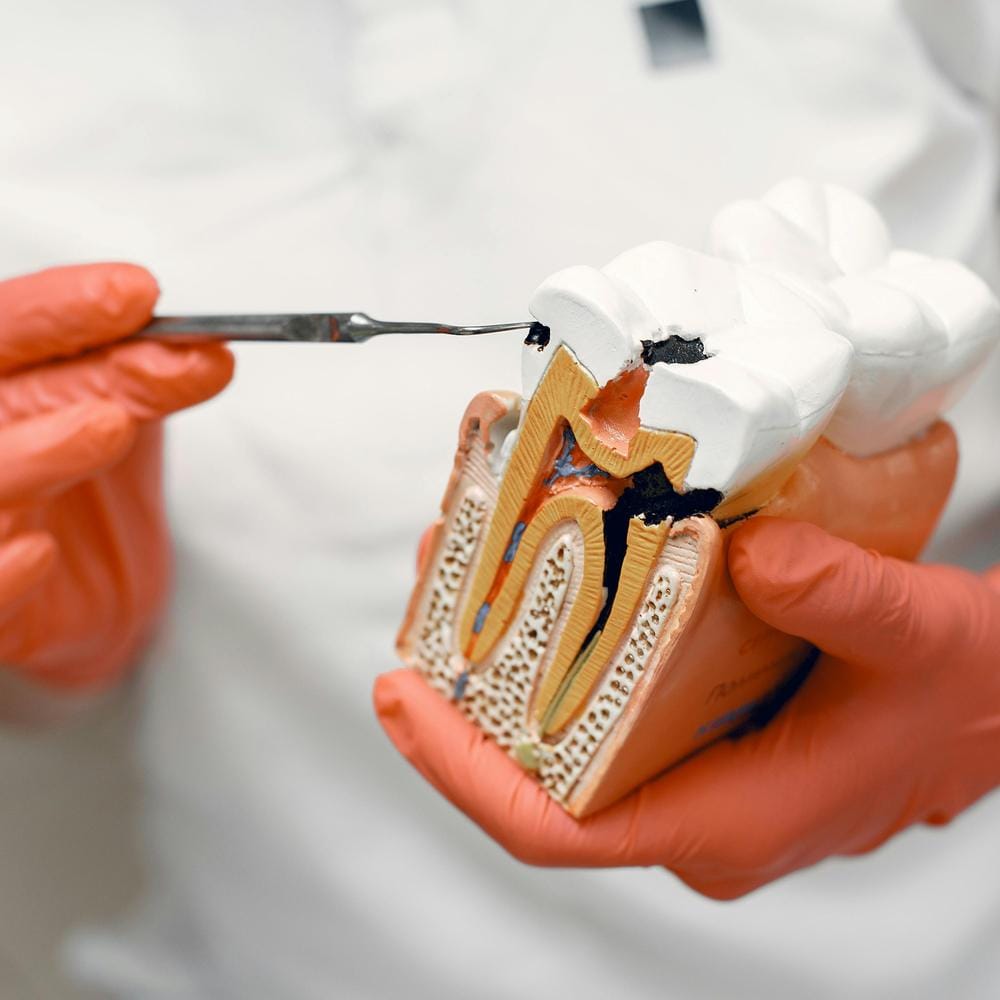
Knowing the anatomy of the tooth is important. Why? Understanding its structure helps you to not only maintain good oral health, but also identify when there is an issue with a tooth and which dental treatment is needed.
What are the different types of teeth?
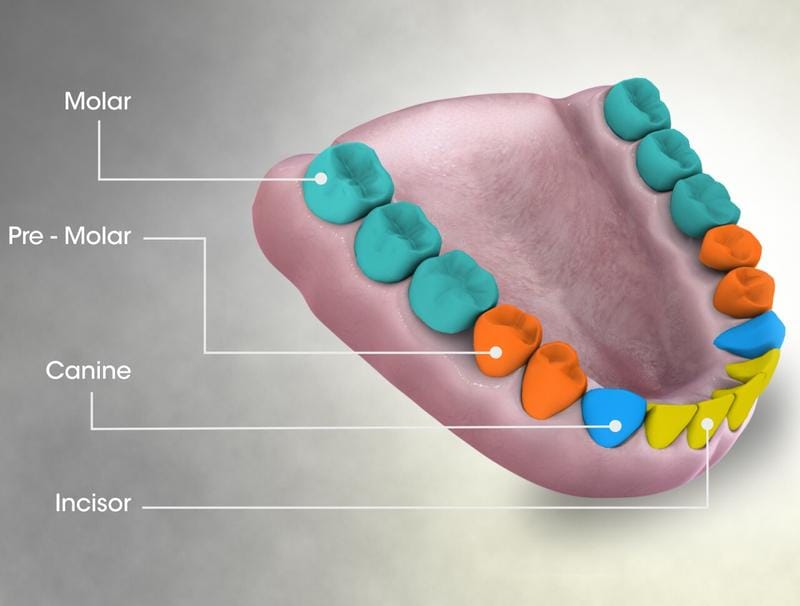
Adults typically have 32 teeth in total (less if wisdom teeth are removed, or you have a health condition such as hypodontia), whereas a child has 20 baby teeth. Each tooth plays an important role in the digestion process.
- Incisors: These are your two front teeth, and the individual teeth sat next to them. You also have four incisors on your bottom jaw. The primary function of these teeth is to cut food when you bite.
- Canines: Located next to your incisors, you usually have four canines in total, one in each quadrant of the mouth. They are very sharp and help to tear food, guide the direction of your bite and support the neighbouring teeth.
- Premolars: This terms refers to the teeth between your canines and molars. What is their purpose? To grind food and transition it from the front of the mouth to the back.
- Molars: Molars do most of the chewing, allowing you to swallow food safely and obtain as many nutrients as possible. In addition to this, they also help to evenly distribute the force caused by biting and chewing.
Tooth structure
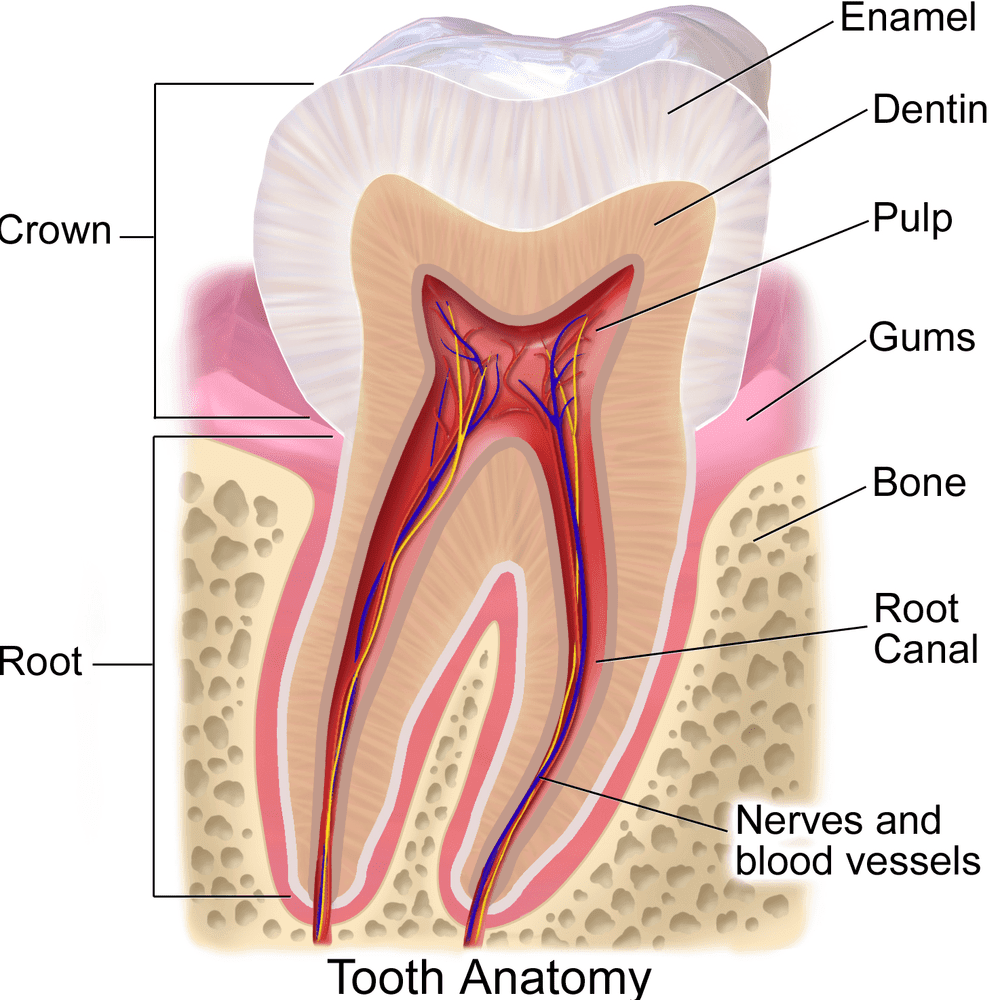
The structure of a tooth can be divided into two main parts, the crown and the root. Before we go inside the tooth, let’s explain what these two terms mean.
The crown is the visible portion of the tooth that sits above the gums. The root, on the other hand, is the part of the tooth concealed by the gums. It anchors to the periodontal ligament (the connective tissue between the tooth and bone) to hold the tooth in place.
Tooth anatomy
So, what are teeth made of? Many people think that teeth are bones, but they are in fact ectodermal organs. Other examples of ectodermal organs are nails, hair and the sweat glands. When discussing the anatomy of the tooth, there are four main layers (and their functions) to be aware of.
- Enamel: The robust outer layer of the tooth. Earning the title of the hardest substance in the human body, it protects the crown against infection, damage, decay and sensitivity to hot and cold food and drink. The enamel also supports chewing and biting.
- Dentin: Just beneath the enamel is a layer of dentin. The purpose of dentin is to support the enamel, protect the nerves inside the tooth and absorb pressure from eating. It is not as strong as the enamel and decays at a much quicker rate.
- Cementum: A type of connective tissue, cementum covers the root of the tooth and helps to keep it firmly in the jaw. In addition to this, the cementum surrounds the tooth’s dentin.
- Pulp: Finally, there is the pulp, the soft, innermost layer of the tooth. Containing blood vessels, nerves and connective tissues, the purpose of the pulp is very important - to provide the tooth with the nutrients it needs to stay alive.
How can I keep my teeth healthy?
As mentioned earlier, teeth are not bones, meaning they cannot repair or regenerate themselves. That is why it is so important to look after your teeth. One of the best ways in which you can do this is with a great oral hygiene routine. Make sure you are brushing your teeth twice a day with a fluoride toothpaste and a great toothbrush. The experts at Yorkshire Dental Suite typically recommend using an electric brush for an effective clean.
Don’t forget to floss either, as flossing helps to remove the plaque, bacteria and food particles stuck between the teeth. Remember – do not rinse your mouth out with water immediately after toothbrushing. This washes away the remaining fluoride and minimises its preventative effects.
We understand that going to the dentist seems intimidating for many, but it is vital that you attend one or two routine check-ups per year. Your dentist will be able to check that your oral health is in good condition and identify any issues that require dental treatment.
YDS also advises attending two hygienist appointments annually for a deep clean. Consider your diet too. Food and drinks that are highly starchy, sugary or acidic can weaken the enamel and cause small holes (cavities) to develop. So, if possible, try to limit your intake of such items. Alongside this, drink plenty of water to encourage saliva production (which neutralises acids in the mouth!) and wash away food particles.
Finally, there are habits that are very damaging to the teeth and should be avoided. These include smoking, vaping, biting your nails and brushing your teeth too hard.
Common dental issues and treatments
Are you experiencing any of the following? These are dental health warning signs that should not be ignored as they suggest that there is an underlying issue present. Contact your dentist as soon as possible to prevent further pain and damage to the tooth.
Symptom | Issue |
|---|---|
Toothache | Tooth decay, dental abscess, tooth eruption, loose or broken filling, chips, cracks, gum disease, bruxism |
Sensitivity when consuming anything hot, cold or sweet | Cavity, enamel erosion, gum recession, cracks, gum disease, teeth whitening treatments, bruxism |
Bad breath | Gum disease, cavity, conditions relating to the mouth, nose or throat |
Bleeding, swollen or tender gums | Gum disease, dental abscess, lodged food, tooth decay, root fracture, poorly fitting orthodontic devices |
Discolouration | Dental plaque, excessive fluoride, teeth whitening treatments, cavities, a dead nerve inside the tooth |
Jaw pain | Bruxism, gum disease, dental abscess, injury, tooth decay, tooth eruption |
Mouth sores | Irritation caused by orthodontic devices, ill-fitting fillings, a sharp tooth, injury, gum disease |
Snoring and sleep apnoea | Bruxism, misaligned jaw |
If you have any of the above, consider the below treatments. Your local dentist will dictate which procedure is the most appropriate.
Problem | Treatment |
|---|---|
Tooth decay | Composite fillings, hygienist appointments, dental crowns |
Dental abcess | Draining, root canals, antibiotics, extraction |
Wisdom tooth | Wisdom tooth removal |
Loose or broken filling | Removal and reapplication of the filling |
Chipped tooth and cracked tooth | Nanofill Composite Bonding®, dental crowns, veneers |
Gum disease | Hygienist appointments, laser therapy, bone grafts or gum grafts (severe cases) |
Bruxism | Mouth guards, splints, crowns, veneers, Nanofill Composite Bonding® |
Cavities | Hygienist appointments, composite fillings |
Enamel erosion | Fluoride treatments, veneers, crowns, Nanofill Composite Bonding® |
Gum recession | Gum grafts, hygienist appointments, antibiotics, Nanofill Composite Bonding® |
Dry mouth | Fluoride treatments and prescribed products including mouthwashes and rinses |
Poorly fitting orthodontic devices | Re-adjustment of the device |
Root fracture | Root canals, fillings, crowns |
Dental plaque | Hygienist appointments |
Excessive fluoride | Enamel microabrasion, veneers, Nanofill Composite Bonding® |
A dead nerve inside of the tooth | Extraction, root canals |
Dental trauma | This depends on the type of trauma you have experienced. Click here to find out more |
Sharp tooth | Nanofill Composite Bonding®, fillings, crowns, veneers |
Misaligned jaw | Jaw surgery |
Conclusion:
By maintaining great oral hygiene and attending regular appointments with your dentist, you can protect your teeth and keep them in good condition. Yorkshire Dental Suite provides a range of treatments that allow you to reclaim and maintain a beautiful smile – book your consultation today.