Tooth Decay Causes & Treatments
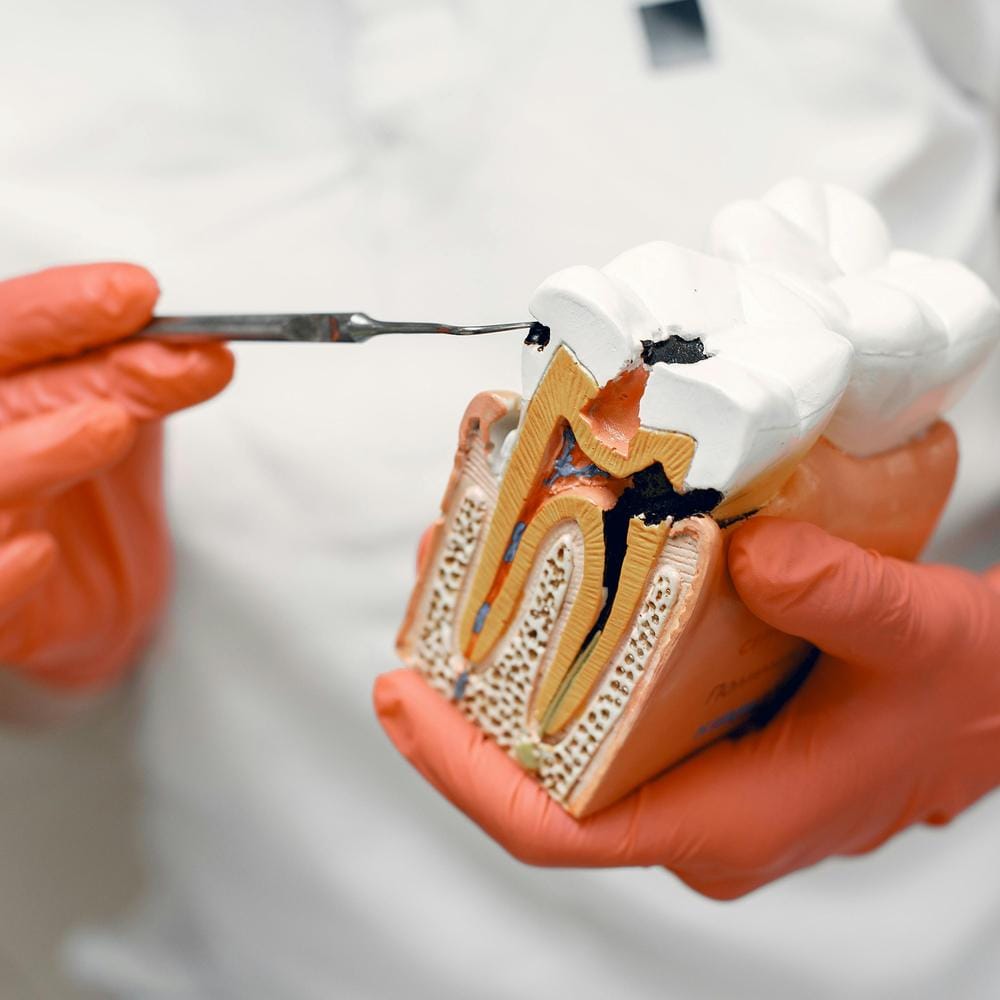
You’ve probably heard of the phrase tooth decay, but what does it actually mean? The term describes damage to the enamel (outer layer) of the tooth. It’s very common, with almost 31% of adults in the UK having tooth decay (1). There are many causes of this condition and, luckily, various treatment options to help restore a healthy tooth.
The causes of tooth decay
As mentioned earlier, there are multiple tooth decay causes that you should be aware of to help prevent the condition from developing. One of the biggest contributing factors is your diet. The bacteria naturally present in the mouth loves sugary and starchy food and drinks, converting these carbohydrates into acids that attack the enamel and cause small holes (cavities) to develop.
Poor oral hygiene also plays a role in tooth decay. When you do not brush your teeth and floss, plaque begins to build up on the teeth. This can quickly turn into tartar, a hard substance that dissolves the enamel. Other causes include age, conditions such as dry mouth, low fluoride intake and vitamin deficiencies.
What does tooth decay look like?
So, how do I know if my tooth is decayed? There are numerous signs to look out for. If you have any of the following symptoms, do not hesitate to contact your dentist. They will be able to manage your discomfort and suggest any suitable procedures.
- Toothache
- A hole in the tooth
- Pain when consuming hot, cold or sweet food and drinks
- Brown, black or white discolouration
- Dental abscess (pus)
- Bad breath
- Bleeding gums
- Swelling gums
- Loose tooth
- Sharp tooth
What are the different stages of tooth decay?
There are five stages of tooth decay altogether. The earlier this condition is identified by a professional, the more likely it is that the tooth can be saved with dental treatment, rather than extracted.
- Demineralisation: The first stage of tooth decay happens when the enamel begins to lose minerals. This is because it is exposed to acids produced by plaque bacteria. Many report seeing the formation of white spots.
- Enamel decay: If left untreated, the decay continues to break down the enamel further. White spots darken in colour and cavities form. To prevent further decay, a cavity will need to be filled by a dentist.
- Dentin decay: Dentin (the tissue that sits beneath the enamel) is soft and easily damaged by acids. If the acids reach the dentin, the rate of decay accelerates. You may also start to feel pain and sensitivity.
- Pulp damage: The pulp is the innermost layer of the tooth and contains nerves and blood vessels that keep the tooth alive. When the damage reaches the pulp it becomes swollen, putting painful pressure on the tooth. Discolouration worsens.
- Abscess: If the decay is still not treated at this point, the tooth is at risk of becoming infected. In some cases, this leads to pockets of pus forming at the bottom of the tooth, alongside severe discomfort that spreads to the face, jaw and neck. The infection may spread to other areas of the body too.
How is tooth decay diagnosed?
This is through routine check-ups with your dentist. They can diagnose decay by assessing the condition of your teeth with small tools and carrying out dental x-rays. Be sure to alert your dentist if you are experiencing any discomfort and which area of the mouth it is coming from. The experts at Yorkshire Dental Suite recommend visiting your dentist for an oral health check twice a year.
What are cavities?
Cavities are decayed areas of the teeth that have turned into small holes. They are sometimes referred to as dental caries. If left untreated, cavities become bigger, and start to cause numerous oral health issues, as well as ongoing discomfort for the patient. There are three different types of cavities to be aware of:
- Smooth surface cavities: Found on the flat exterior surfaces of the teeth.
- Pit and fissure cavities: Found on the chewing surfaces of the teeth.
- Root cavities: Found on the root surfaces of the teeth.
Tooth decay treatment options
Depending on how severe the decay is, your dentist will recommend a specific treatment to help you reclaim and maintain a healthy smile. Please note that the following applies to adults only.
Treatment | Stage of decay | How it works |
|---|---|---|
Fluoride treatments | Demineralisation | Dentists can provide fluoride mouthwashes and varnishes to help strengthen the enamel and prevent cavities. |
Filling | Enamel decay, dentin decay | One of the most common treatments, fillings remove the decay from the tooth and patch up the hole left by a dental cavity. |
Root canal | Pulp damage | This process removes the infected nerves, tissues and blood vessels from the pulp before sealing the tooth with a filling. |
Tooth extraction | Pulp damage, abscess | Extraction is suggested as a last resort, and your dentist will do everything possible to save the tooth. However, if the decay is too severe, extraction may be the only option. |
Dental crown | Enamel decay, dentin decay | A dental crown replaces damage on the visible portion of a tooth, leaving the root intact. They are often used to replace a large filling. |
Porcelain veneer | Enamel decay | Porcelain veneers address years of wear and tear, including tooth decay, while giving patients a dazzling, Hollywood-style smile. |
If you lose a tooth to decay, ask your dentist about procedures such as dental implants. These treatments replace missing teeth and prevent problems caused by gaps in the mouth (for example, tooth migration).
How do I prevent tooth decay and cavities?
One of the most effective ways to prevent tooth decay is with a good oral health regime. That means flossing regularly and brushing twice a day with a great toothbrush and fluoride-infused toothpaste. Don’t rinse your mouth immediately with water after brushing as this removes the fluoride on your teeth.
Schedule two check-ups a year with your dentist, as well as two hygienist appointments for a deep clean. Try to limit your intake of sugary and starchy food and drinks too (if able) to lessen the risk of cavities forming. Finally, if you have any tooth decay symptoms, tell your dentist! Early detection is key.
FAQs
We have answered some of the most common questions we receive at Yorkshire Dental Suite about tooth decay. Do not hesitate to contact us if your query is not listed here – we will assist you in every way possible.
Is tooth decay reversible?
Yes, if it is caught early. For example, if your tooth decay is at stage one (demineralisation), fluoride treatments can reverse the damage. Please note that later stages of decay have permanent consequences.
What happens if I don’t treat my decayed tooth?
Ignoring your tooth decay and allowing the condition to develop leads to many oral health issues. These include pain, infection, severe discolouration and loss of the tooth altogether. Do not ignore your symptoms!
Can decaying teeth be saved?
The answer to this differs from patient to patient. Root canals are typically the last treatment used to try and save the tooth before extraction; however, this procedure is not always successful. As a result, removal is the only option for patients with severe tooth decay.
How much is tooth decay treatment in the UK?
This price changes depending on the treatment used. We have put together a table to give you an idea of how much your tooth decay repair can cost. Yorkshire Dental Suite provides numerous finance options to help fund your procedure – your dentist will explain this to you during your initial consultation.
Treatment | YDS cost | Available on the NHS? |
|---|---|---|
Filling | From £195 | Yes (Band 2, £76.60)* |
Root canal | From £895 per tooth | Yes (Band 2, £76.60)* |
Tooth extraction | From £350 | Yes (Band 2, £76.60)* |
Dental crown | £895 per tooth | Yes (Band 3, £332.10)* |
Porcelain veneer | £895 per tooth | Yes (Band 3, £332.10)* |
*While these treatments are available on the NHS, you may face multiple challenges, such as long waiting lists, appointment availability and eligibility issues, particularly for cosmetic procedures like veneers. The materials used will also not be as aesthetic as the ones used in private dental clinics.
Can a rotten tooth make you ill?
Yes. Infection is a side effect of tooth decay and has the ability to weaken your immune system. It can also spread to other parts of the body if left to develop. Contact your dentist or doctor immediately if you have an infection or feel unwell.
Is it too late if a cavity hurts?
Not necessarily. If you are in pain, it would suggest that the cavity has gone deeper into the tooth and requires a more intensive treatment. That is why early detection is key, as it gives your tooth a higher chance of survival.
What is the black stuff in a cavity?
The black dots are where bacteria has eroded the enamel. If you spot black dots on your teeth, it doesn’t necessarily mean that there is decay present – sometimes it is simply a stain, or a dental condition like fluorosis.
How long do fillings last?
One of the most popular cavity treatments, the longevity of a filling depends on the material used. A composite filling may last up to 15 years, while an amalgam filling can last up to 20 years.
Conclusion:
Tooth decay is a common (and treatable) condition. Patients experiencing tooth decay symptoms should seek dental treatment to stop the damage from worsening and manage discomfort.
References: