Hypodontia: Causes And Treatment Options
Contact us to discuss replacing your hypodontia with dental implant and discover your options, costs, and pay monthly finance options.
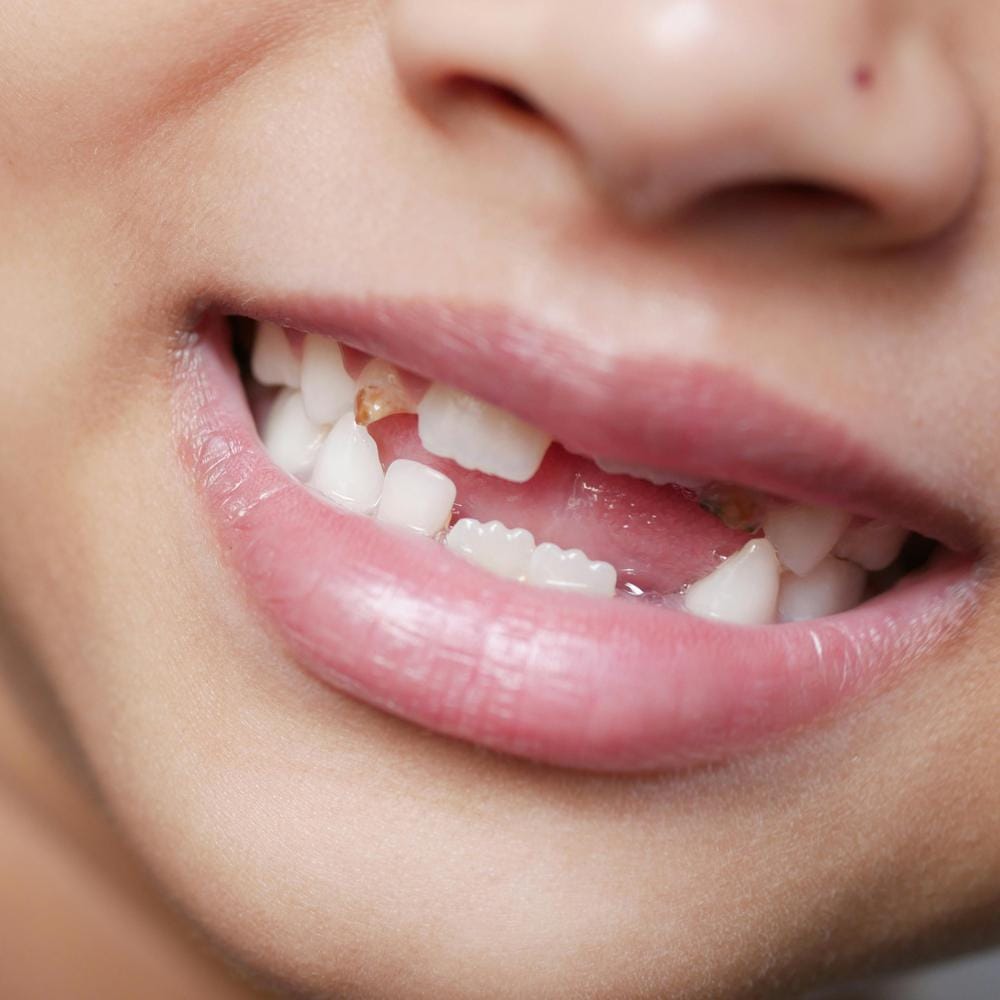
Hypodontia means that one or more teeth are missing from the mouth. Affecting both baby teeth and adult teeth, the dental condition is more common in females and affects around 3-5% of the population (1).
The lower back teeth and/or the top front teeth are usually the ones missing. For patients wishing to fill the gaps left by absent teeth, there are many treatment options to choose from, including dental implants.
What are the different types of hypodontia?
There are four types of hypodontia, with Congenitally Missing Teeth (CMT) being the most common.
- CMT: The absence of primary teeth from birth.
- Tooth Agenesis: The absence of one or more teeth.
- Oligodontia: The absence of six or more teeth.
- Anodontia: The absence of all teeth in the mouth as they have failed to develop.
What causes hypodontia?
Genetics is believed to be the most prevalent cause of hypodontia. This means that, if your parents have hypodontia, the chances of you developing the condition are increased. Another contributing factor is dental trauma. If you have suffered some type of injury at a young age, the trauma has the ability to disrupt the development of your teeth or cause them not to form.
Certain medical conditions can also contribute to hypodontia, such as ectodermal dysplasia. Other recognised causes include infection and environmental factors when you are developing in the womb, for example, if the pregnant person is undergoing chemotherapy.
Can hypodontia affect my oral health?
Missing teeth have the ability to cause numerous oral health issues, as well as a lack of self-confidence.
Issue | How does it affect my oral health? |
|---|---|
Tooth migration | When there is a gap in the mouth, the teeth adjacent to the space gradually move towards it (a process called tooth migration). This leads to problems like crowding, chips, ulcers and painful joint problems. |
Bone loss | Teeth stimulate the jawbone. When a tooth is lost, the jawbone subsequently deteriorates. It may cause artificial ageing and further tooth loss, as well as malocclusions and unwanted bite adjustments. |
Smile misalignment | As mentioned earlier, gaps in the mouth contribute to misalignment. If the teeth are not straight and uniform, they are generally harder to clean, making the development of cavities and gum disease more likely. |
Chewing and biting problems | There is a heightened risk of wear and tear if teeth are not meeting properly when biting down or chewing. In addition to this, you are not obtaining as many proteins and nutrients as your food is not being broken down properly. |
How do dentists treat hypodontia?
Your most suitable treatment will depend on how many missing teeth you have. Rest assured, your dentist will help to identify which is the most appropriate.
Clear aligners and fixed braces for teeth
Orthodontic treatments like these are best suited for hypodontia patients with just one tooth missing. Both work by exerting pressure onto the teeth to encourage movement and fill the gap.
Dental implants
A dental implant replaces a missing tooth with a durable, ultra-aesthetic replacement. The implant is surgically inserted into the jawbone, leaving behind a perfectly restored smile that lasts up to 20 years.
Dentures
Whether it’s with a fixed implant-retained denture or a partial denture, this device quickly replaces one or multiple missing teeth. It is a long-term solution that provides 10-20 years of wear.
Dental bridges
Bridges are attached to the healthy teeth adjacent to the gap to fill your smile, rather than the jawbone. They tend to be lower in cost than dental implants and still offer a natural look and feel.
Conclusion: While it is not a life-threatening condition, hypodontia has the ability to cause multiple oral health problems and self-consciousness. Contact Yorkshire Dental Suite and book your hypodontia treatment today for a confident and healthy smile.
References:
(1): https://elht.nhs.uk/application/files/5415/2362/7704/Hypodontia.pdf