Dental Bridge Vs Dental Implant
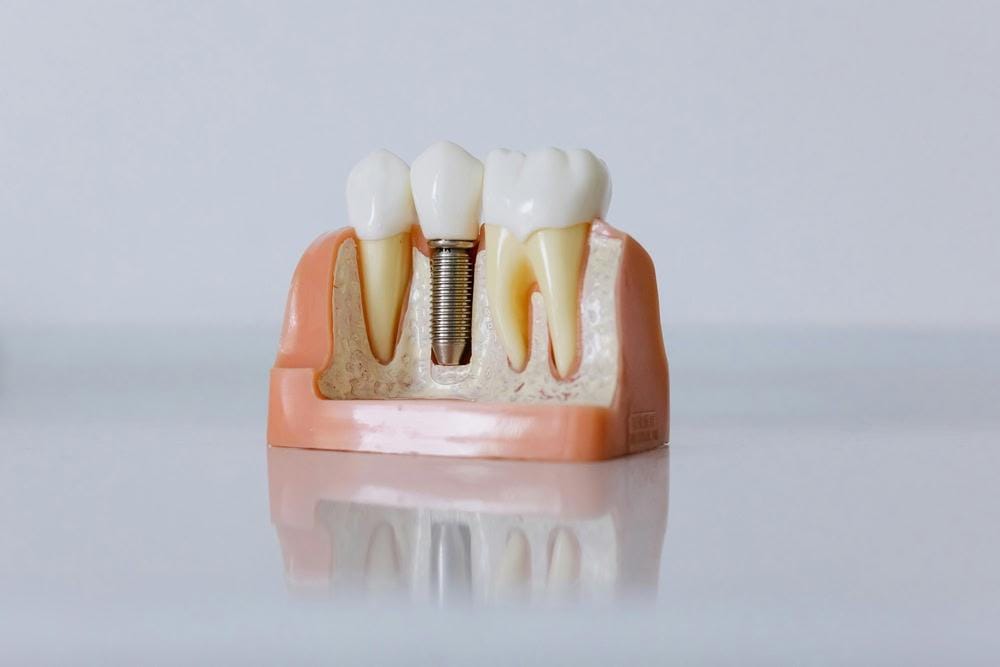
To fix missing loose and damage teeth with implants or bridges - contact us today to discuss options, costs and pay monthly finance.
A common question is, what is the difference between a dental bridge and a dental implant? Both fill gaps in your smile – however, they use different techniques to do so. Read on to learn about how each procedure works, alongside their pros and cons, before choosing the best treatment for you.
Benefits Of Dental Bridges
A dental bridge fills the gap left behind by a missing tooth. Also known as partial dentures, the bridge is attached to the healthy adjacent teeth to stay in place. There are many benefits to a dental bridge. Designed to match the colour and shape of your natural teeth, they are imperceptible in the mouth.
Dental bridges are also cheaper and easier to claim on the NHS compared to dental implants. The procedure is also a great option for individuals with multiple missing teeth that need to be replaced, or who have low bone density. This is because the bridge affixes to existing teeth, rather than bone.
- NHS Price: £332.10 (Band 3)
- Bridge Implants Teeth Cost - Private Price: £2,500
Benefits Of Dental Implants
A dental implant replaces broken, worn and missing teeth with a perfect substitute. Rather than attaching it to another tooth, a tooth implant is inserted into your jawbone, before a porcelain crown is fitted on top. One significant benefit of teeth implants is the longevity. If properly cared for, it can last 30+ years.
Additionally, dental implants look and feel natural in the mouth, performing just like your natural teeth while you speak and chew. Unlike a dental bridge, a dental implant does not need to be fixed to the adjacent teeth, instead attaching to an abutment in the gum. This helps to keep the surrounding teeth healthy.
- NHS Price: £332.10 (Band 3)
- Dental Implants - Private Price: £2,800 per tooth
Please note pricing accurate at the time of publication and is subject to change without notice - contact us for the latest offers and up to date pricing.
Disadvantages Of Dental Bridges
Dental bridges do not offer the same longevity as dental implants, lasting up to 10 years with proper care. They also cause irreversible damage to the natural teeth next to the gap. This is because a portion of the enamel needs to be removed before placing a dental bridge. For some people, this can cause sensitivity.
Another disadvantage of dental bridges is the increased risk of decay, cavities and gum disease as they are harder to clean. As the jawbone naturally changes due to ageing or other factors, the bridge may become ill-fitting. This leads to adjustments and replacement bridges.
Disadvantages Of Dental Implants
Dental implants are usually only available with a private clinic, with very few individuals being able to claim it on the NHS (for example, if you cannot wear dentures or have sustained trauma to the face, you may be eligible). Therefore, prices tend to be higher. Another thing to note is that a dental implant discolours over time and cannot be whitened.
As it is a medical procedure, dental implants are not without risks, such as infections and nerve and tissue damage. The crowns fitted on top of the implant are not indestructible either; while your dentist can fix damage to your crowns, it will come at an extra cost. In rare case, due to the hormones in the mouth area, there is an increased chance of heart failure.
Dental Bridge Vs Dental Implant
In dentistry, bridges vs implants is a common debate. Both are a great option for missing teeth. They help to restore confidence in your smile and reinstate the ability to enjoy your favourite foods without pain. Dental implants last longer than dental bridges and do not damage the healthy teeth adjacent to the gap. On the other hand, dental bridges tend to be lower in cost. Consult with your dentist to decide which treatment is best for you.
Conclusion:
Dental bridges and dental implants quickly fill gaps in your smile. Whether you are replacing a single tooth or a full row, these dental treatments have the ability to enhance your quality of life.