What Is Tooth Migration?
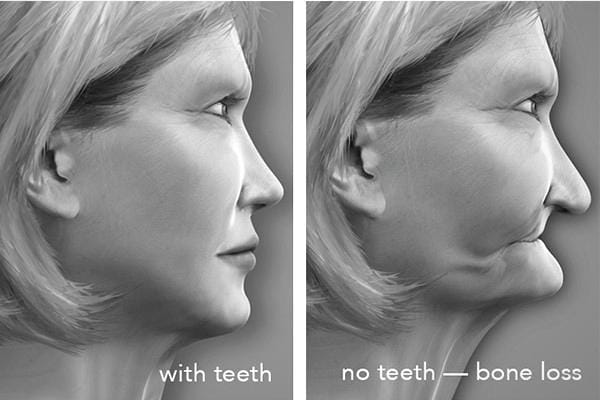
When a tooth slowly shifts away from its usual position, the movement is often referred to as ‘tooth migration’. A common dental condition, this motion causes multiple oral health issues if left untreated.
Why are my teeth moving?
There are numerous reasons as to why teeth move out of alignment. Some reasons are completely out of our control.
- Age: It is normal for teeth to move over time. Our bones and connective tissues gradually lose density and elasticity, leading to complications such as gum recession, loose teeth and changes to the appearance of your face.
- Genetics: Some individuals are simply born with teeth that are more prone to shifting than others, alongside malocclusions such as overbites and underbites. If members of your family have a misalignment, you are more likely to have one.
- Gum disease: Also known as periodontal disease, this painful condition can cause bone loss and gum recession which, in turn, contributes to tooth movement.
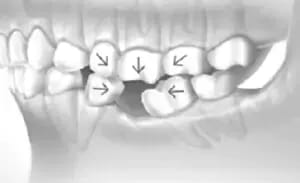
- Missing teeth: When a tooth is extracted without being replaced, this may encourage tooth migration. Why? The teeth adjacent to the gap start to shift into the space left behind.
- Bruxism: This term refers to the excessive clenching and grinding of your teeth. As a result of the uneven pressure in the mouth, teeth are able to move out of misalignment.
- Injury: Car accidents, fighting, falling over – all can cause trauma to the face and mouth. This injury is a contributing factor to changes in the teeth, including unwanted movement, looseness or loss.
- Orthodontic treatment: Patients who have orthodontic treatments and do not maintain their new smile with objects such as a retainer may experience tooth migration.
- Pregnancy: Increased hormone levels have the ability to loosen the bones and tissues that support your teeth, leading to an uncomfortable ‘wiggly’ feeling and tooth movement.
Horizontal tooth migration VS vertical tooth migration
Did you know? There are actually two types of tooth migration, and they are distinguished by one important difference. Horizontal tooth migration describes when your teeth are moving sideways into a gap. As they no longer have any support, the teeth move until they come into contact with another.
Then there is vertical tooth migration, which is when a tooth opposite a gap begins to drift up or down to fill the space. This is a particularly disruptive type of movement that may lead to ulcers, irritation and an uneven bite. Nasty side effects of an uneven bite include headaches and painful joint problems, as well as chipping.
Do I need to have my teeth realigned?
A small amount of tooth movement is completely normal. However, if your teeth are moving significantly and contributing to other dental problems, it is important to see a dentist for evaluation and possible treatment.
Clear aligners and fixed braces
An easy way to stop tooth migration is with teeth straightening devices such as fixed braces and clear aligners. Both work the same way, exerting pressure onto the teeth to pull them back into their correct position. There are some differences to take into consideration before deciding which treatment route you would like to go down.
Fixed braces for teeth use wires and brackets to align your teeth, and are a great option for patients with a more severe misalignment. This type of brace tends to be less discreet and limits your diet. On the other hand, clear aligners subtly straighten your smile in a short period of time. The transparent trays are removable, lightweight and almost imperceptible in the mouth.
- Price for clear aligners: Starts at £1,495
- Price for fixed braces: Please enquire
Dental implants
If your migration is happening as a result of tooth loss, why not opt for a dental implant? Filling a gap with just one implant can make a huge difference. A specialism of Yorkshire Dental Suite, the procedure includes surgically inserting a grade 5 titanium implant into the jawbone. An abutment is fitted, before the implant is finally topped with a durable porcelain crown.
This life-changing treatment not only fills gaps in your smile and prevents tooth migration, but also stops pain caused by chewing and restores confidence in your smile once again.
- Price for dental implants: Starts at £2,800 for a single tooth implant
How to prevent tooth migration
Let’s talk about how you are able to prevent tooth migration without having any of the aforementioned procedures.
- Attend hygienist appointments: Individuals with gum disease can treat this condition with regular visits to your dental hygienist for a deep clean.
- Don’t neglect your routine check-ups: Your dentist will check for signs of tooth migration and suggest treatment options (if deemed necessary).
- Have a good oral hygiene routine: This protects against the formation of gum disease. Remember to brush your teeth twice a day and floss.
- Wear a retainer: Once treatment has corrected your smile’s alignment, use a retainer to stop your teeth from moving again.
Conclusion:
Tooth migration comes with many side effects that impact your confidence and oral health. At Yorkshire Dental Suite, we provide many treatments that stop further tooth migration and straighten your smile. Do not hesitate to contact us – we will support you in every way possible.