Additional Treatment You May Need Before a Dental Implant
If you are considering dental implants please contact us to discuss your concerns, treatment options, pricing and pay monthly finance.
Dental implants are a life-changing treatment, eliminating the embarrassment, pain and inconvenience of missing, broken and worn teeth with a long-wearing replacement. The process not only restores confidence in your smile, but also removes discomfort caused by eating and speaking.
Some patients have external dental issues that jeopardise the success of the procedure. Therefore, your dentist may suggest additional treatments to make you a suitable candidate for dental implants. For many, these extra procedures are compulsory.
Am I eligible for dental implant treatment?
Before your dental implant procedure, your dentist will take photographs, scans and X-rays, while additionally examining your medical history. Blood tests may also be carried out to get a comprehensive view of your bone density and oral health. Major issues that affect your eligibility for dental implants include:
- Autoimmune disorders such as lupus and rheumatoid arthritis: Increases the risk of implant rejection.
- Uncontrolled diabetes: Affects the healing process and increases the risk of infection.
- Heart conditions: Local anaesthesia or sedation can put you at risk. Seek advice from both your dentist and cardiologist.
- Bone disorders such as osteoporosis or osteogenesis imperfecta: Increases the risk of implant failure.
- Smoking: Affects bone density and is a significant cause of gum disease, which can prevent the implant treatment from being a success.
If you have any of the aforementioned issues then please consult with your dentist and doctor to decide if dental implant treatment is suitable for you. Other problems include gum disease and low bone density – however, these are easily addressed with the following treatments.
Gum graft
This special type of graft treats gum recession. This is when the gums surrounding the teeth pull away, exposing more of the tooth and its root. Individuals may experience unpleasant side effects such as infection and sensitivity.
When there isn’t enough gum around an implant, it becomes at risk of being exposed to bugs and bacteria, which may lead to the failure of the implant. A gum graft shields your new tooth. This procedure is also carried out for aesthetic purposes, for example if the recession is making your smile look flat.
Bone graft
A dental bone graft enhances the amount of bone that you have in your jaw, creating a strong, secure base for the implants to anchor onto. If your oral health is being impacted due to low bone density, this may be a beneficial treatment.
What material is used in a bone graft? The one chosen for you will depend on numerous factors, including the amount of bone lost and the risk of rejection. The material can be taken from your own body, a human donor or an animal. Your dentist will talk you through your options in great detail.
Sinus lift
When a patient wishes to have dental implants in their upper jaw (but does not have the sufficient bone to support the implant), a sinus lift is the perfect solution.
The surgical procedure adds more bone to the maxillary sinuses, which are located in the maxilla bone. Commonly referred to as a sinus graft, this treatment is painless with sedation, just like bone grafts and gum grafts. It is sometimes carried out in the same appointment as your dental implant treatment.
Tooth extraction
Before a dental implant can be placed, any remaining tooth left in the space needs to be removed. Your dentist will either extract it on the same day as the implant fitting or remove it prior to the day in order to give your mouth time to heal.
Some patients may find this treatment intimidating. It is very common, and you are in good hands with Yorkshire Dental Suite. Once is the tooth is removed, your perfect replacement is fixed permanently in place, giving you the smile you have always dreamed of.
Hygienist appointments
Have gum disease? This needs to be treated before you are able to have dental implants. Why? Gum disease increases the chance of infection and implant failure, so treatment is absolutely necessary.
One way to treat gum disease is with regular visits to a hygienist. During these appointments, your mouth will undergo a deep clean. This includes removing plaque, tartar and bacteria build-up on your teeth with specialised tools. The hygienist will also give you advice on how to improve your current oral care routine.
Teeth whitening
Teeth whitening is completely optional, but our at-home treatment is something we recommend undergoing prior to your procedure – this is because a dental implant cannot be whitened once attached. Brightening the teeth next to your implant allows your dentist to achieve the best colour match possible. If you are having a full arch fitted, this step is not necessary.
Once fitted, you can protect your dental implant against discolouration by trying to avoid staining food and drinks as much as possible (tea, coffee, red wine, tomato-based sauces). Quit smoking or vaping too – this stains your implant significantly.
Dental implant procedure
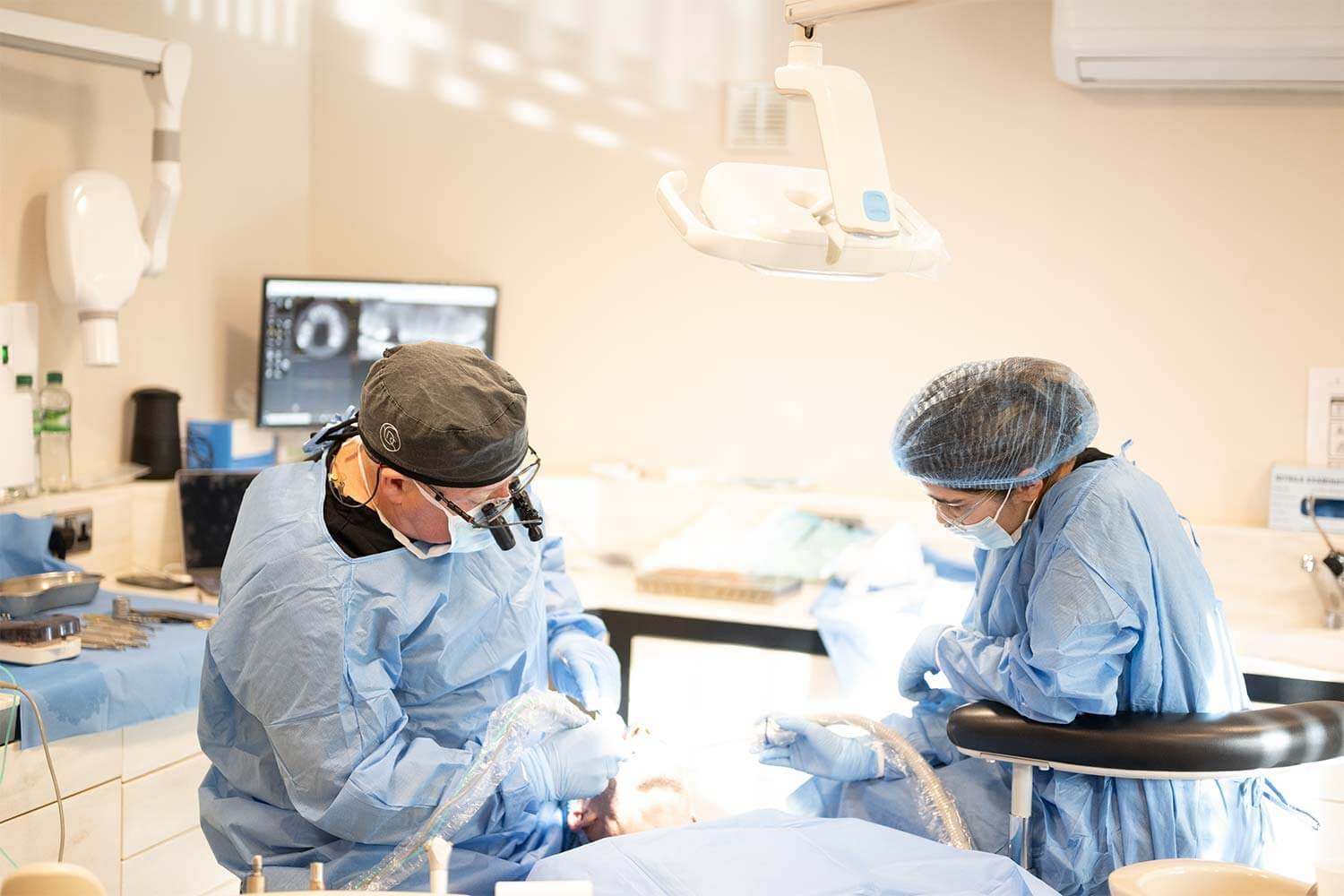
Now that you’re ready for your treatment, let’s go into detail about what you can expect on the day. You are given the sedation of your choice, making the procedure pain-free. Teeth are removed (if required) and an incision is made in the gum. Then it’s time for the fitting – a grade 5 titanium implant is screwed into the jawbone, before an abutment is attached on top.
If you are having an implant bridge, multiple implants and abutments will be used. Your temporary teeth are then fitted. Your gum needs several months to recover before you come back and have your final teeth fitted. If well cared for, your smile has the ability to last 20+ years!
Conclusion:
These additional procedures allow as many patients as possible to receive dental implant treatment. Yorkshire Dental Suite are specialists in the implantology field – contact us today to book your consultation.