Dental Myth-Busting: Is Mouthwash Bad For You?
Transform your smile with a professional dental teeth whitening treatment - contact us today to discuss options, costs and pay monthly finance.
The safety and effectiveness of mouthwash is commonly debated in the dental industry. NHS guidance suggests that certain types of mouthwash can prevent tooth decay (1), while other experts argue that it does more harm than good. So, is mouthwash bad for you? The experts at Yorkshire Dental Suite weigh in on this long-standing debate.
Is mouthwash bad for you?
No. Medically, mouthwash is recognised to support good oral health. However, certain ingredients and incorrect utilisation makes it a controversial product. Let’s debate both sides of the argument and discuss mouthwash pros and cons.
Pros | Cons |
|---|---|
Reduces the amount of bacteria in the mouth | Many patients report feeling a painful burning sensation during use |
Minimises plaque build-up | Has the ability to irritate gums, canker sores and ulcers |
Removes food debris | In some cases, contributes to dry mouth |
Helps to protect against gum disease and cavities | Can aggravate gum disease symptoms |
May strengthen the enamel | Teeth staining and discolouration |
Freshens up the breath | Temporary change in taste |
Please note that different ingredients provide different benefits. If you wish to incorporate a mouthwash into your routine, choose a product that will support your specific needs. You may have also noticed that certain medical websites report that mouthwash contains ‘cancer-causing chemicals’. However, YDS, the NHS and other leading national healthcare providers cannot substantiate these claims*.
Ingredients to look for in mouthwash
What should your mouthwash contain? These popular ingredients offer a wide range of benefits for your oral health.
- Fluoride: Helps to strengthen the enamel and prevent tooth decay.
- Cetylpyridinium Chloride: Kills bacteria and reduces plaque.
- Chlorhexidine: Has antibacterial properties.
- Essential Oils: Soothes irritation, kills bacteria and minimises bad breath.
- Zinc: Targets plaque and tartar.
Which ingredients should you avoid in mouthwash?
When asked this question, the first answer for many is alcohol. Alcohol most definitely has its advantages and disadvantages; for example, it helps to remove bacteria and provides a fresh, clean feeling. On the other hand, alcohol can also cause dry mouth and painful irritation. The experts at Yorkshire Dental Suite recommend avoiding artificial colours, dyes and sweeteners. Why? These ingredients have the ability to cause an allergic reaction.
How to use mouthwash
Mouthwash is not a replacement for brushing and flossing. It is designed to complement your existing oral health care routine. Excessive mouthwash use may cause extreme dry mouth, sensitivity and tender gums. Therefore, knowing how and when to use this product is essential.
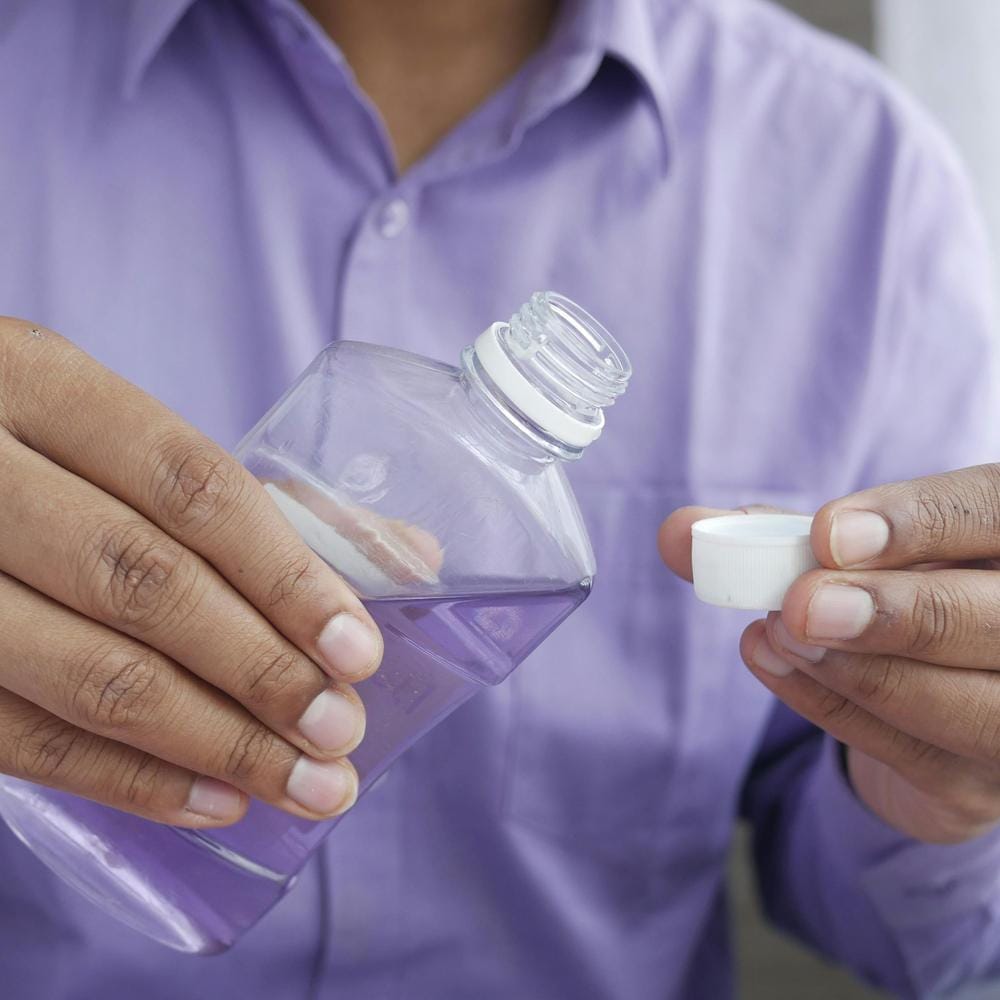
- Pour your chosen mouthwash into the cap until it reaches the provided line. This is the brand’s recommended amount.
- Empty the cup into the mouth and swill for 30 - 60 seconds.
- Spit out the mouthwash (do not swallow!).
Do not use mouthwash straight after brushing your teeth. This is because it will wash away any fluoride remnants left from the toothpaste. Avoid eating or drinking 30 minutes after using mouthwash too.
FAQs
We have answered some common mouthwash questions. If you query isn’t addressed below, do not hesitate to contact us.
Why does mouthwash burn?
The burning sensation is usually due to the alcohol content. It may also burn if you are using the mouthwash too much or have any ulcers or sores.
When mouthwash burns, is it killing germs?
Menthol or alcohol are often to blame for the burning sensation you experience. Both have antibacterial properties so yes, you could argue that the ‘burn’ is killing the germs.
How much alcohol is in mouthwash?
The percentage usually varies between 14% and 27%. Some mouthwashes don’t contain alcohol at all!
Is there an age limit on mouthwash?
As they are not able to rinse and spit properly yet, children under six should not use mouthwash.
Is it good to use mouthwash daily?
Most mouthwashes may be used up to two times per day. Remember to follow the instructions closely.
Conclusion: If used correctly and according to your oral health needs, mouthwash can be a great addition to your oral health routine. If you have any concerns, please consult with your dentist or contact Yorkshire Dental Suite.
References:
- https://www.nhs.uk/live-well/healthy-teeth-and-gums/how-to-keep-your-teeth-clean/
- https://www.healthline.com/health/dental-and-oral-health/is-mouthwash-bad-for-you
- https://news.cancerresearchuk.org/2009/01/14/does-mouthwash-cause-cancer/
- https://pmc.ncbi.nlm.nih.gov/articles/PMC6982979/
*Does mouthwash cause cancer: Internet research carried out on the 14th of November 2025. Use credible sources to do your own research.