Internal Tooth Whitening Treatments
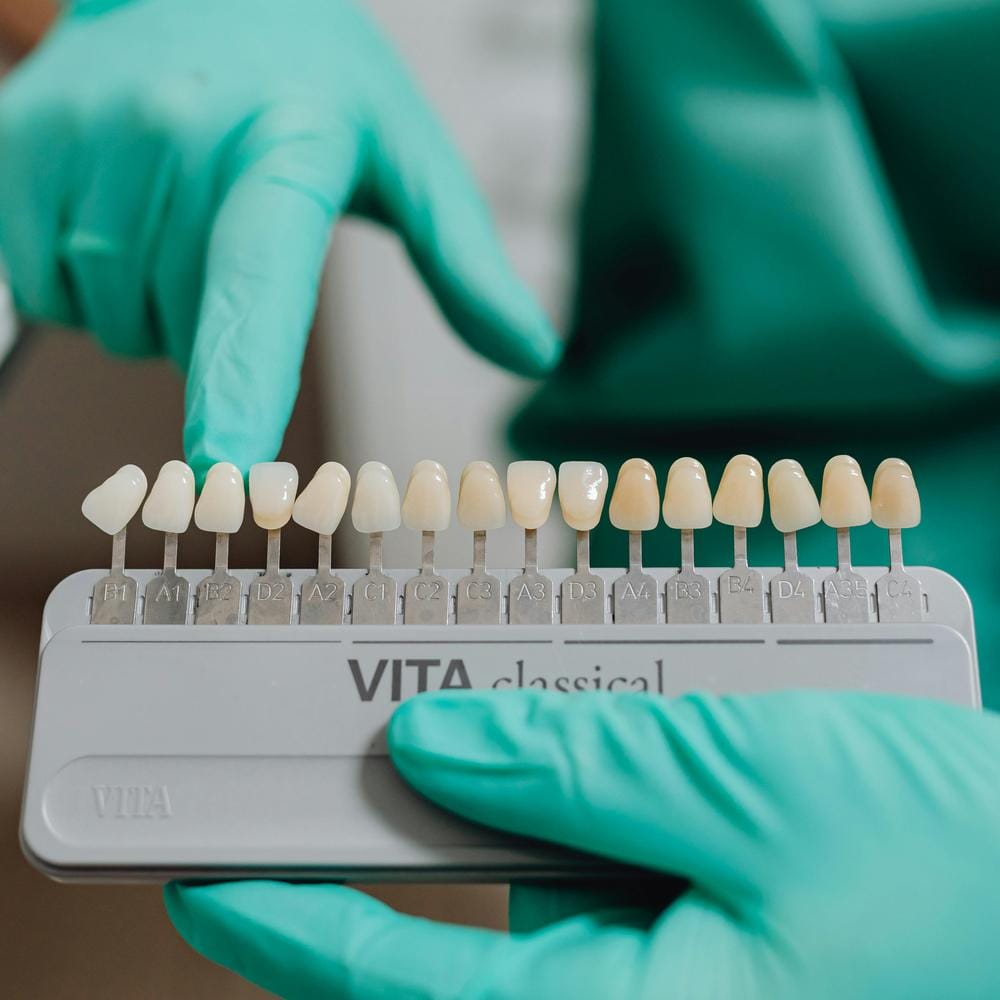
Treat dull and damaged teeth with internal teeth whitening treatments - contact us for options, pricing and pay monthly finance.
Internal tooth whitening addresses discolouration and stains that originate from inside the tooth. Through a variety of targeted treatments, dental professionals help patients to achieve a bright, uniform smile.
Extrinsic vs. intrinsic tooth stains – what’s the difference?
Intrinsic stains start inside the tooth. It is usually a result of things such as medication, injury and certain health conditions, and is trickier to treat than extrinsic. Why? Because it is the dentin, the layer beneath the enamel, that is affected.
Extrinsic, on the other hand, refers to the staining of the enamel, the hard outer layer of the tooth. It is caused by something that comes into contact with the tooth, such as food and tobacco.
The different types of tooth stains and their causes
Discolouration doesn’t always appear as yellow or brown. In fact, it can appear as a wide variety of colours. Let’s go into more detail about the different types of tooth stains and their causes.
Colour | Causes | Extrinsic or intrinsic |
|---|---|---|
Yellow | Poor oral hygiene, age, diet | Intrinsic and extrinsic |
Brown | Tobacco, poor oral hygiene, tea, coffee | Extrinsic |
White | Dental fluorosis | Intrinsic |
Grey | Dental trauma | Intrinsic |
Purple | Red wine, berries | Extrinsic |
Black | Severe tooth decay | Intrinsic and extrinsic |
Internal teeth staining and discolouration is best managed by a dentist. Using prescription bleaching agents and specialist techniques, they are able to go beyond the enamel and treat staining at a deeper layer.
- Internal tooth bleaching: A small opening is made in the tooth. A whitening agent is then inserted into the hole, before being sealed with a filling.
- Enamel microabrasion: The procedure includes removing a thin layer of the enamel. It is often paired with tooth bleaching for maximum results.
- Porcelain veneers: Similar to enamel microabrasion, the irreversible process requires shaving down some of the enamel. Next, a porcelain veneer is sealed onto the desired tooth, instantly transforming its colour, shape and size.
- Dental bonding: This is perfect for patients wanting quick results. The minimally-invasive procedure disguises discolouration by curing a bright-white resin onto the teeth with a UV light.
Some at-home teeth whitening kits may also be an effective treatment, depending on the ingredients used and their strength. Yorkshire Dental Suite’s set uses 16% carbamide peroxide, a concentration that is 32 x more potent than non-prescription kits found over-the-counter, to address both extrinsic and intrinsic staining.
How long does internal whitening take? The duration changes based on the treatment you choose to have. Some procedures, like dental bonding, offer results in a matter of hours, whereas others require multiple appointments. As every patient is unique, it is important to remember that treatment times will differ.
How much does internal teeth whitening cost?
The price changes based on the treatment you choose. If the staining is the result of something like dental trauma, you may require additional procedures (like a root canal) to get your tooth to the desired colour. This will increase your overall spending.
Treatment | Average cost (UK) | Available on the NHS? |
|---|---|---|
Internal tooth bleaching | £200 - £1,000 | No |
Enamel microabrasion | Starts from £100 | No |
Porcelain veneers | £700 - £1,400 per tooth | No |
Dental bonding | Starts from £250 per tooth | No |
Root canal | £300 - £950 | Yes (Band 2, £76.60) |
FAQs
Internal tooth whitening and intrinsic stains can be difficult to understand. We have answered some common questions below that we often receive from our patients. Do not hesitate to contact us if you have any other queries.
Does internal teeth whitening hurt?
There are two ways to interpret this question, so we will answer both. Many treatments will either be painless (like dental bonding), or the patient will be given sedation. After the procedure, you may feel some slight sensitivity or pain, but rest assured your dentist will advise you on how to manage this discomfort.
What is non-vital tooth bleaching?
This refers to the bleaching of a dead (non-vital) tooth. What classifies a tooth as dead? When it no longer receives blood flow. Usually, a root canal is recommended prior to tooth bleaching.
What ingredients are used for internal tooth whitening?
Common dental whitening materials include carbamide peroxide, sodium perborate and hydrogen peroxide. They are found in both self-administered teeth whitening products and professional procedures.
Conclusion:
So, does internal tooth whitening work? Yes! Treatments like tooth bleaching have proven to be very effective when treating intrinsic discolouration. While it may take a few appointments to get to the desired aesthetic, the final result can provide a life-changing confidence boost.