What Is A Crossbite & Treatments?
A crossbite is the misalignment of the upper and lower teeth when you close your mouth. This misalignment can affect a single tooth or a group of teeth. It is recommended that if you have a crossbite it should be treated. Failing to do so can lead to painful medical conditions and make your teeth wear unevenly.
Depending on the type you have however, and the extremity of your case, treatment options differ. Learn about the different types of crossbites and what measures can be taken to correct it with our in-depth guide.
What Is A Crossbite & What Are The Causes?
This dental condition affects the way your teeth are aligned. Found in childhood and adulthood, a crossbite is caused by several factors, including genetics, mouth-breathing and the delayed loss of baby teeth. Habits such as prolonged thumb-sucking can also cause a crossbite in future years.
Types Of Crossbite
Type | Description |
|---|---|
Anterior | When the upper front teeth sit behind the lower front teeth |
Bilateral | The crossbite affects both sides of the mouth |
Buccal | When the teeth sit too far out towards the cheek |
Lingual | The lower teeth are pushing in the direction of the tongue |
Posterior | The upper back teeth sit inside the bottom teeth |
Segmental | Affects 2 or more teeth in a row |
Single tooth | Affects just one tooth |
Unilateral | When only one side of mouth is affected |
Treating A Crossbite
Aligners for teeth
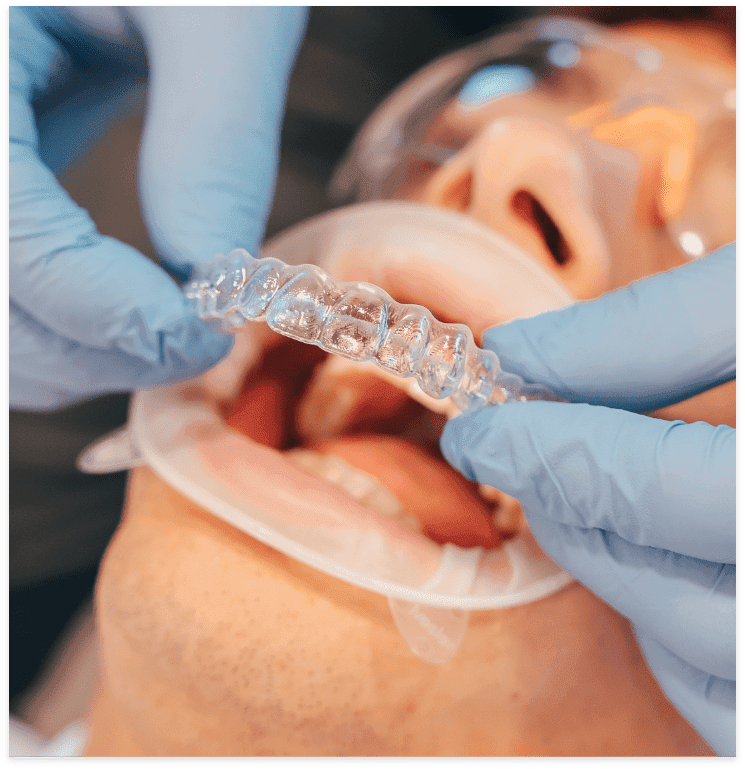
Clear Aligners are a great option for mild to moderate crossbites. Made from clear plastic, the thin trays resemble a mouth guard, helping to straighten the teeth discreetly. Unlike fixed metal braces, you can take aligners out while eating. This type of treatment is specifically designed to be almost invisible in the mouth.
Braces for teeth
This orthodontic device aligns and straightens teeth. A fixed brace attaches a thin wire and small brackets to each of your teeth to reduce the appearance of crookedness. A palate expander may be used to widen a narrow upper jaw, while elastics are often used in conjunction with your fixed braces to help align your teeth and close any gaps.
Nanofill Composite Bonding®
Suitable for mild crossbite cases, cosmetic dentistry such as Nanofill Composite Bonding® visibly fix an overbite. A reversible treatment, this type of veneer includes painting resin onto the teeth and curing with a UV light, before the resin is hardened and hand finished by your dentist. This helps to minimise the appearance of crossbite but doesn’t fix the issue.
What Happens If I Don’t Get My Crossbite Treated?
There are many conditions that can develop if a crossbite goes unmanaged.
- Jaw pain
- Gum disease
- Increased risk of tooth decay
- Increased risk of teeth grinding (also known as bruxism)
- Cheek biting
- Uneven wear of teeth
- Visibly uneven jaw
Conclusion:
This form of malocclusion may cause pain and changes to the appearance of your jaw and face. If you have a cross bite, consult with your dentist to discuss treatment options.