Dental Implant Placement: A Simple Guide
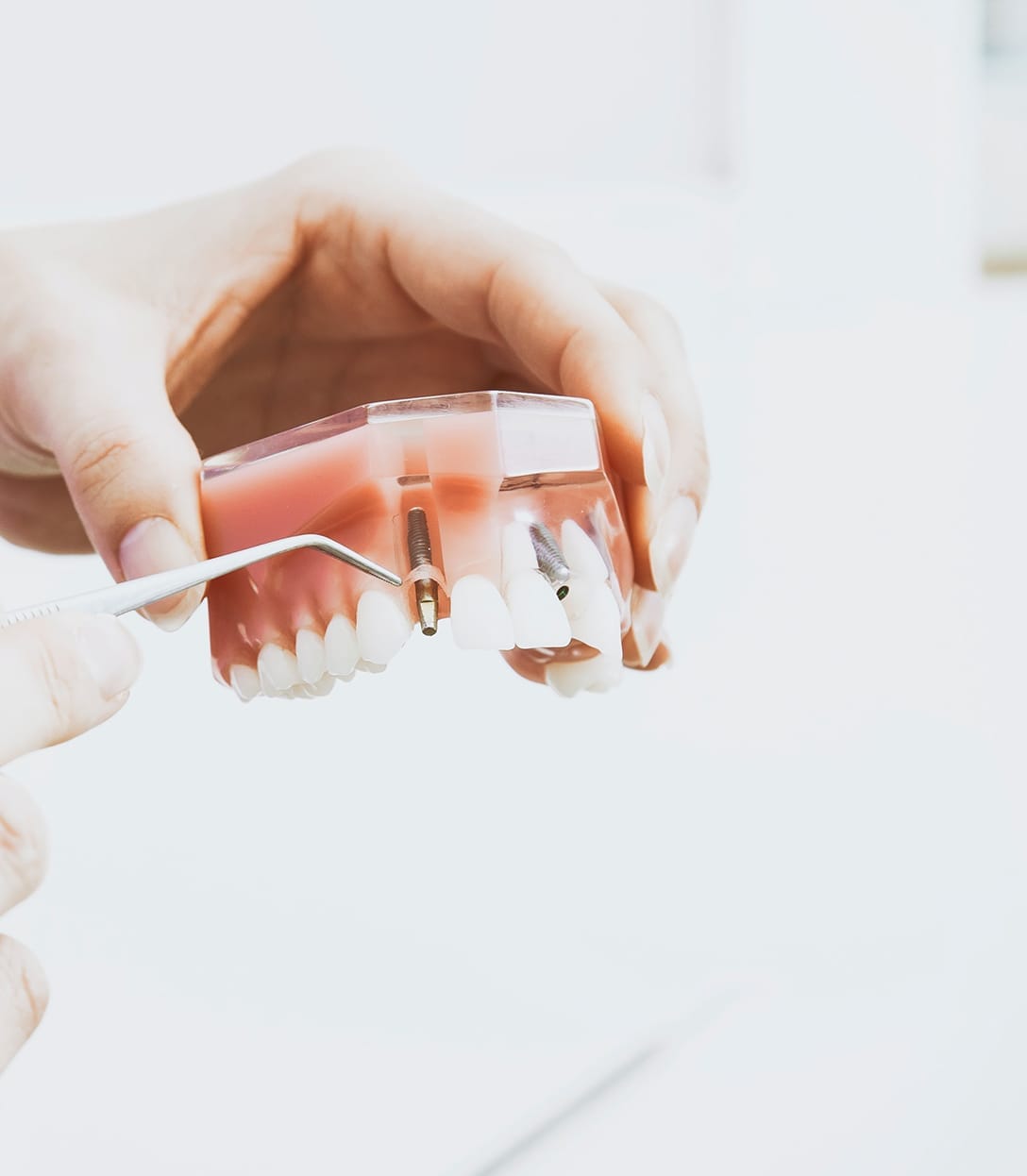
Transform your smile with dental implants - contact us today to discuss options, costs and pay monthly finance.
If you have loose or missing teeth, or a denture you struggle to tolerate, the chances are you’ve considered dental implants. We have created a quick and easy guide to the steps involved in dental implant placement here at Yorkshire Dental Suite.
1. Initial Consultation
The first step is attending an implant consultation. At this appointment, you will meet with one of our implant and oral surgeon specialists who will take the time to discuss your concerns. During this appointment, we will do a comprehensive dental examination, assessing the health of your teeth, gums and jaw(s). Your specialist will assess your suitability for a dental implant. Suitable candidates have the following attributes:
- Missing one or more teeth
- Damaged tooth
- Good oral hygiene
- Sufficient bone in the jaw to support implants
- Overall decent physical health
If you are identified as unsuitable for teeth implants, the team will discuss any treatments required before your implant procedure.
A detailed CBCT scan is taken of your mouth and jaw(s), allowing us to plan your case to perfection. Your dentist and dedicated team member will talk to you about your recommended treatment plan and go over the steps of the procedure. They will also discuss the time-frame for the treatment and your end result. Finance options will be discussed in detail, and you will be given plenty of information to consider. Your treatment plan is unique to you, and is designed and tailored with you in mind.
2. Planning
To plan your case with such remarkable precision, we need to gather vital information. At your planning appointment, we take a series of photographs, scans, and a CBCT radiograph. With specialised software, we transform these details in to a virtual image of your teeth, gums, and jaw(s). We can now accurately place your implant on screen, avoiding adjacent teeth and important nerves. Your unique digital plan is manipulated to provide your implantologist with a surgical guide. This rests in your mouth, providing the perfect platform to deliver your implant(s) in the ideal position.
3. First Phase of Treatment
The first phase of treatment involves the removal of any teeth which are being replaced with one or more tooth implants. Our clinicians will provide you with a temporary denture or bridge to wear whilst you undertake the remainder of your treatment. If you are missing a front tooth, you won’t be left with a gap! If a bone graft is required, this will be delivered at this appointment. Following a bone graft procedure, you can require up to 9 months of healing before your jaw is ready for the first implant.
4. Implant Placement
The next phase of treatment is your implant placement. The dental implant is made of titanium, and is gently placed in your jaw-bone. The procedure usually takes 1-2 hours and is performed under local anaesthetic for a comfortable experience. For more anxious patients, we offer dental sedation to keep you calm and relaxed during your appointment. Once your implant is placed, a healing cap is attached to protect the implant.
After your implant has been placed, it is important to allow time for the site to heal, and your implant to integrate with your jawbone. This process usually takes up to 3 months.
5. Implant Uncover
Once your tissues have healed, we remove your healing cap or temporary crown/bridge. Then, we take a series of impressions to make your permanent abutment. Your impressions are sent to a specialised laboratory where your final implant crown is created, bespoke for you. This is a quick, pain-free appointment. You can expect to spend around 30 minutes with us, and no local anaesthetic is required.
6. Final Fitting
3 weeks later, we receive your final implant crown from the laboratory, and it is ready to be fitted. No local anaesthetic is required. Your dentist will gently remove the healing cap and place your final implant crown. Treatment is complete, and you walk away with a new smile
7. Aftercare: The Dos & Don’ts
Knowing how to look after your dental implants post-procedure is paramount. If you do not care for yourself properly, the risk of infection and failure of the implant increases significantly. Something to take into consideration is that every patient’s healing journey is different. Follow the specific aftercare instructions and timeframes set out by your dentist for a smooth recovery.
DO:
- Stick to a soft, nutritious diet for the first two weeks following your procedure.
- If needed, manage any pain with your usual over-the-counter medication or antibiotics (only if prescribed).
- Maintain good oral hygiene, being careful not to disturb the dental implant site for one week after the treatment.
- Reduce swelling by applying ice packs or frozen peas to your outer jaw.
- After 24 hours, use a mouthwash containing chlorhexidine. Follow the instructions on the label.
DO NOT:
- Smoke or drink alcohol.
- Drink or eat anything with dairy.
- Partake in strenuous activities.
- Use straws – this may disturb the blood clot.
- Touch your implant with your tongue or fingers.
8. Maintenance
Once your implant has been placed, routine maintenance is extremely important. We take this very seriously, and our team take the time to explain what is required. Strict oral hygiene is crucial to the long-term success of your dental implant, and we take every step to assist you. You will be offered opportunity to join our enhanced care plan, which entitles you to 2 x dental health examinations and 4 x hygiene appointments per year. Plan members also benefit from an additional 10% off future treatment.
As a minimum, we recommend that all dental implant patients attend an annual implant screening appointment. This allows your dentist to check the health of the implant and the surrounding tissues. Our implants have a high success rate; but, should a problem arise, let your dentist know immediately. The earlier an issue is caught, the higher the chance of implant recovery.
Conclusion:
Undertaking dental implant treatment is a big decision. It is not a quick-fix treatment, and the planning and procedure can take several weeks-months. It is important to remember that if cared for correctly, implants last 20+ years. Implants can be life changing, allow you to chew without pain and restore your confidence.