Dental Fluorosis – White Spots & Marks On Teeth
If you have fluorosis and want a treatment designed to reduce its visibility, contact Yorkshire Dental Suite to discuss treatment options in one of our 9 nationwide private dentals clinics.
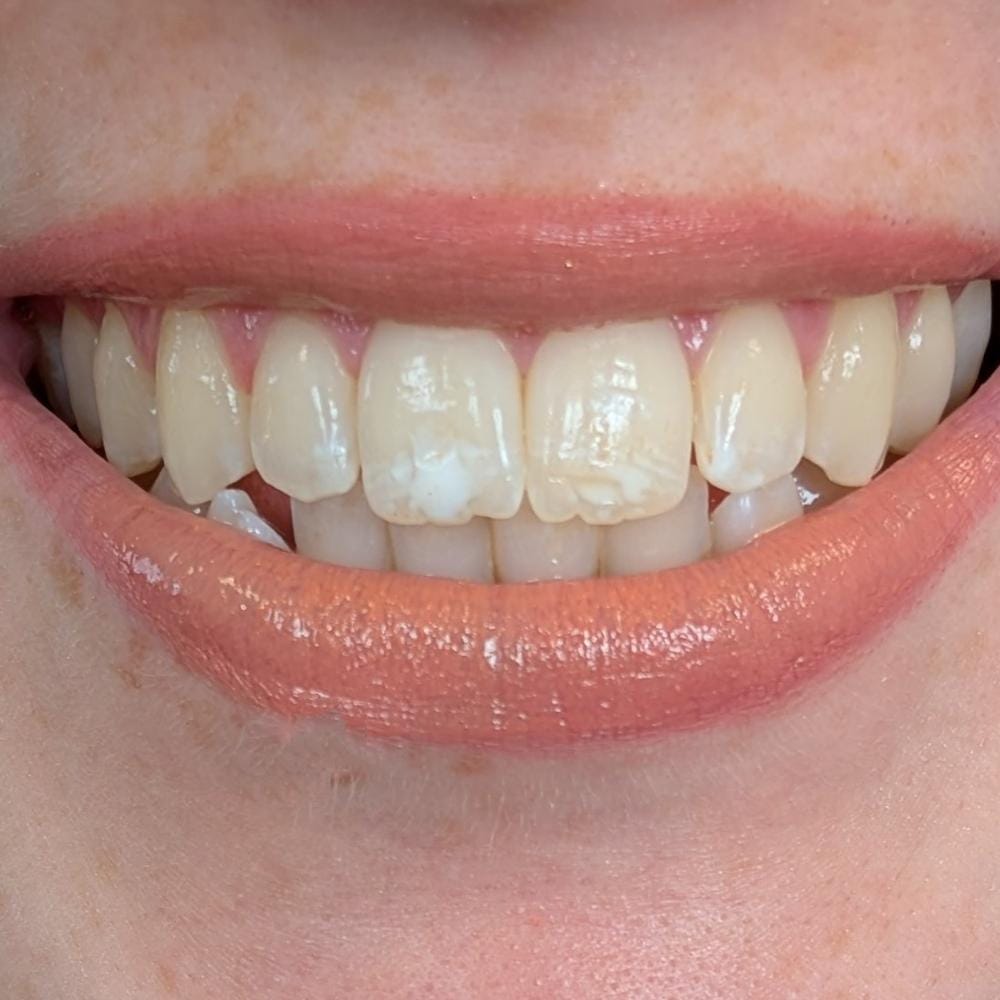
Dental fluorosis is a condition that marks the surface of your teeth with white flecks, spots and lines. These marks can range from barely visible to severe, where the discolouration is brown and covers a large portion of your smile.
According to the British Fluoridation Society, the condition is believed to affect around 20% of the UK population. It is not usually painful and doesn't affect the function of the tooth.
What are the causes of fluorosis, and can I prevent it?
The dental condition is caused by overexposure to fluoride while your permanent teeth are evolving (this is usually by the time you turn 8). Once the adult teeth have started to come through the gums, you cannot develop dental fluorosis.
To help minimise the risk of the condition forming, you can assist your child while they clean their teeth. Make sure they do not use too much toothpaste and mouthwash and teach them to spit out the toothpaste once they have finished brushing.
The different levels of dental fluorosis
From patient to patient, the severity of dental fluorosis differs. What do the different levels look like?
- Questionable: Occasional white spots and flecks visible.
- Very mild: Less than 25% of the tooth is covered in light white patches.
- Mild: Less than 50% of the tooth is covered with white discolouration.
- Moderate: More than 50% of the tooth is marked. The spots are white or light brown.
- Severe: All surfaces of the enamel are affected with white, light brown and dark brown discolouration. There may also be pitting (enamel wear and tear).
Treatment options
Can dental fluorosis be reversed? The answer is no. However, there are certain fluorosis treatments that disguise its appearance, helping you to achieve the bright, uniform smile you have always wanted. Here are the ways in which you can get rid of white spots on teeth.
Teeth whitening
Teeth whitening is one of the most effective ways to treat dental fluorosis. At Yorkshire Dental Suite, we use a 16% concentration of carbamide peroxide, which is 32 x more potent than non-prescription kits found over the counter, to deliver a bright, gleaming smile that lasts up to 12 months.
This agent releases hydrogen peroxide when it comes into contact with the surface of the tooth, acting as a bleaching agent to whiten the enamel and lift stains. You may be wondering, does teeth whitening damage enamel? If the carbamide peroxide concentration is too high, it has the potential to harm your teeth. That’s why it’s important to choose a dentist-led treatment.
- Price for teeth whitening: £395
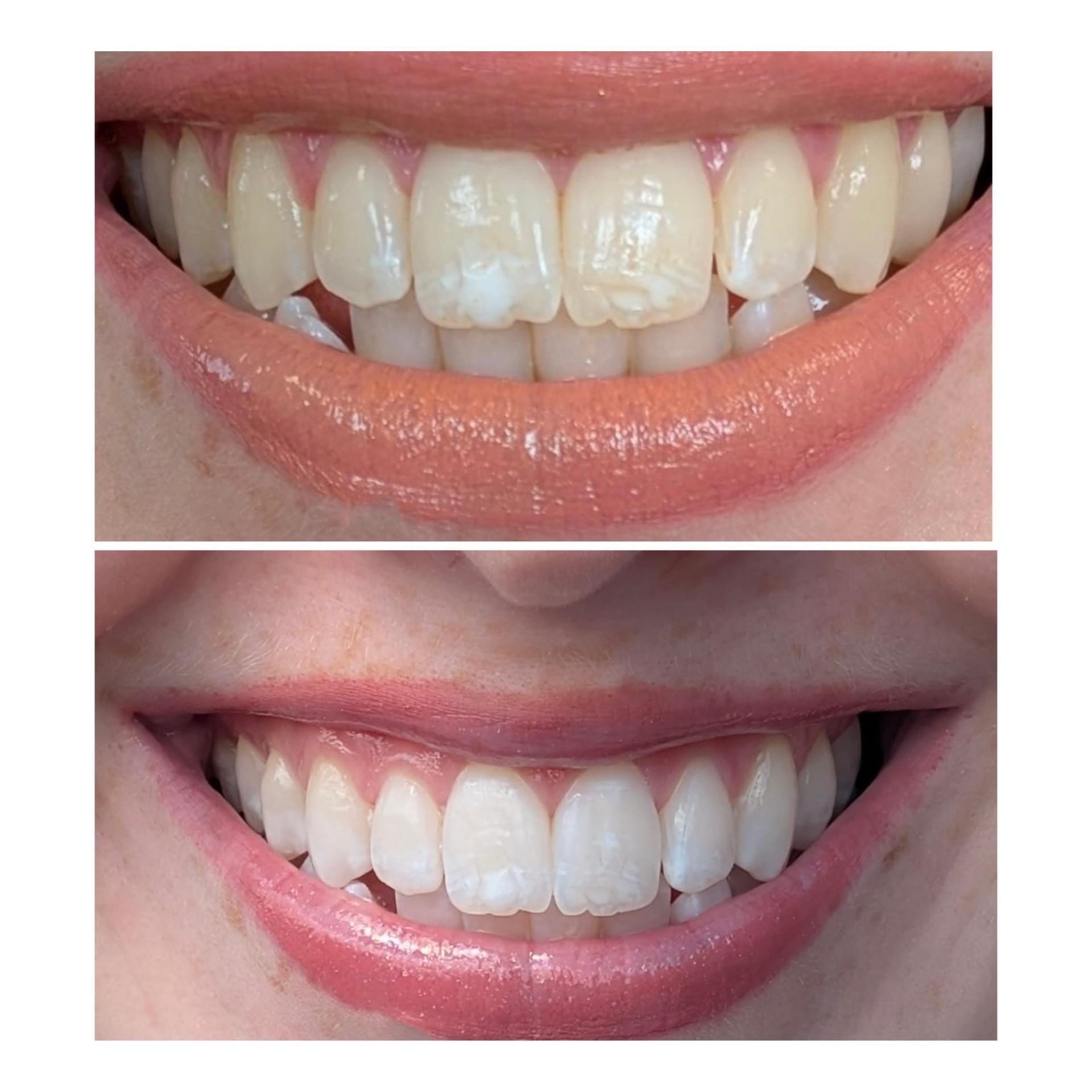
Nanofill Composite Bonding®
The next level in cosmetic dentistry, Nanofill Composite Bonding® perfects your smile in just one appointment (usually under four hours or less!). How? Our trademarked process includes painting over the tooth with a durable resin. Then, it is meticulously moulded and shaped into the desired look, before being set with a UV light.
The pain-free procedure is designed to last up to 8 years if well cared for. Alongside discolouration caused by dental fluorosis, this treatment visibly fixes other irregularities in your smile, such as chips, cracks and small gaps.
- Price for composite bonding: £395 per tooth
Porcelain veneers
If your dental fluorosis is more severe, your local dentist may suggest porcelain veneers. An incredibly popular treatment, it is also a great option for patients with teeth worn down by years of wear and tear.
Your dentist will start by removing part of the tooth’s enamel. Next, your custom-made veneer is placed onto its surface, instantly reimagining the colour, shape and size of the tooth. Offering up to 15 years of wear, our chip-resistant veneers offer a dazzling, Hollywood-style smile.
- Price for porcelain veneers: £895 per tooth
Why is fluoride important?
A naturally occurring mineral found in toothpastes and mouthwashes, alongside certain foods and drinks, fluoride actually plays an essential role in our dental health. It helps to strengthen the enamel, which prevents the development of tooth decay and gum disease as a result. Therefore, fluoride is important!
Decalcification VS fluorosis
Similar to fluorosis, decalcification affects the tooth enamel. However, there are some key differences between the two conditions. Decalcification occurs when minerals are lost from the enamel. This can be a result of plaque and tartar build-up, as well as certain food and drinks.
Conclusion:
While it is generally not painful and has no impact on your day-to-day life, we understand that having teeth with fluorosis can affect your confidence. With our cosmetic procedures, you are able to disguise the discolouration – contact us to discuss your treatment options.
References:
- file:///C:/Users/Marketing/Downloads/Dental%20fluorosis%20-%20Printable%20(2).pdf