From £395 per tooth
Composite bonding
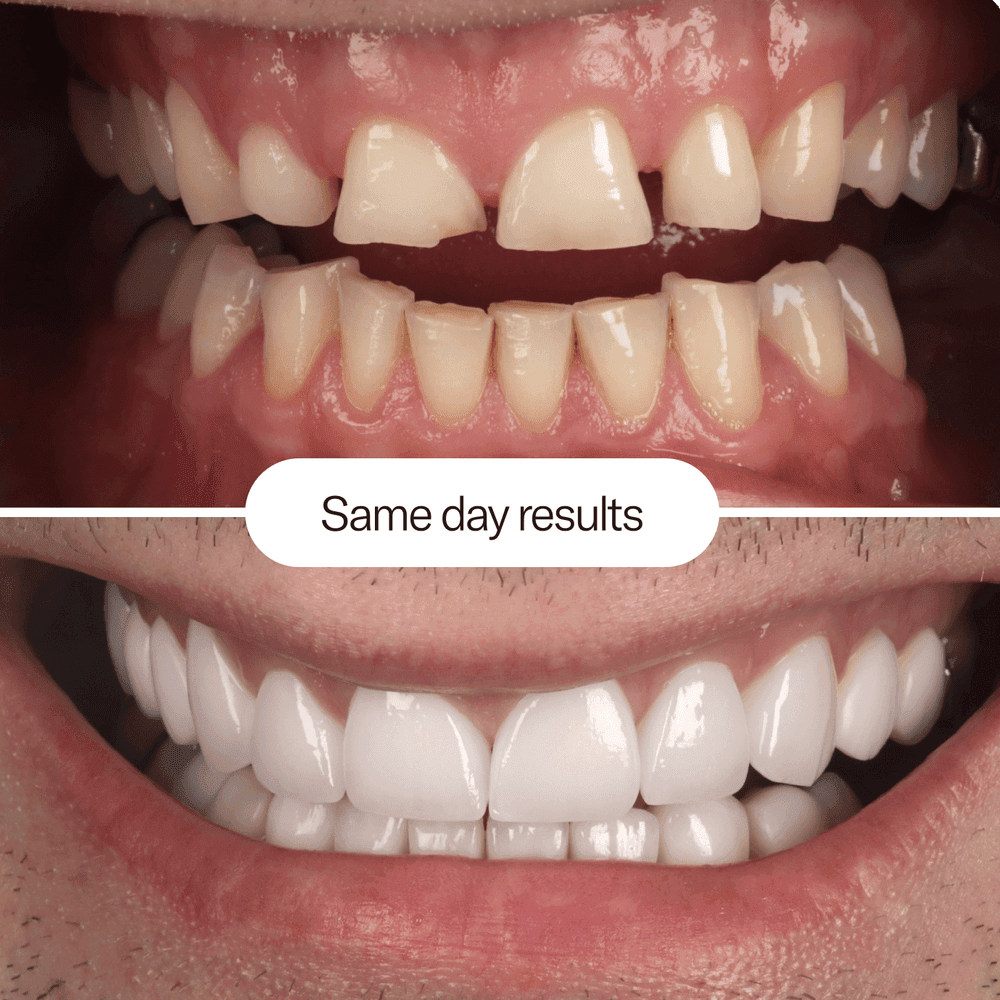
For patients aged 18+, Nanofill Composite Bonding® refreshes your whole smile in just a few hours without drilling or injections. Using composite resin veneers, each tooth is hand sculpted with the colour, size and shape designed to enhance your smile.
Written by Dr Abdul Dalghous. GDC 81805, Clinically reviewed & updated 6 October 2026.
How much does composite bonding cost in the UK?
Perfection is a confident Nanofill™ smile
Smile Solution packages include the hygiene and remedial work* needed to get your teeth and gums treatment-ready (worth up to £2,185). Not included in the per-tooth price.
Check your eligibility and get £215 worth of scans & X-rays for just £65. Book your consultation today at one of nine clinics nationwide.
Per tooth
from
Single Tooth
- No monthly payment option for single tooth Nanofill Composite Bonding®
- Designed by a GDC-registered dentist
- For chips, cracks & discolouration
- Lasts around 5 years
- Takes less than 2 hours
Single Smile Solution
from
Full Price £3,750
- 10 teeth (e.g. top set)
- Includes prescription whitening, retainers and remedial work⁺ worth up to £2,185
- For chips, cracks & discolouration
- Lasts around 5 years
- Takes less than 4 hours
*Representative example of a finance plan for a Nanofill Composite Bonding® of 10 teeth. Cash price £3,750, loan term of 30 months repayable at £125 per month at 0% APR Representative. The total amount of credit would be £3,750, total interest paid is £0.
Enquire Now ➜Dual Smile Solution
from
Full Price £7,000
- 20 teeth (a full smile makeover)
- Includes prescription whitening, retainers and remedial work⁺ worth up to £2,185
- For chips, cracks & discolouration
- Lasts around 5 years
- Takes less than 8 hours
*Representative example of a finance plan for a Nanofill Composite Bonding® of 20 teeth. Cash price £7,000, loan term of 30 months repayable at £233.33 per month at 0% APR Representative. The total amount of credit would be £7,000, total interest paid is £0.
Enquire Now ➜Per tooth
from
Single Tooth
- No monthly payment option for single tooth Nanofill Composite Bonding®
- Designed by a GDC-registered dentist
- For chips, cracks & discolouration
- Lasts around 5 years
- Takes less than 2 hours
Single Smile Solution
from
Full Price £3,750
- 10 teeth (e.g. top set)
- Includes prescription whitening, retainers and remedial work⁺ worth up to £2,185
- For chips, cracks & discolouration
- Lasts around 5 years
- Takes less than 4 hours
*Representative example of a finance plan for a Nanofill Composite Bonding® of 10 teeth. Cash price £3,750, loan term of 30 months repayable at £125 per month at 0% APR Representative. The total amount of credit would be £3,750, total interest paid is £0.
Enquire Now ➜Dual Smile Solution
from
Full Price £7,000
- 20 teeth (a full smile makeover)
- Includes prescription whitening, retainers and remedial work⁺ worth up to £2,185
- For chips, cracks & discolouration
- Lasts around 5 years
- Takes less than 8 hours
*Representative example of a finance plan for a Nanofill Composite Bonding® of 20 teeth. Cash price £7,000, loan term of 30 months repayable at £233.33 per month at 0% APR Representative. The total amount of credit would be £7,000, total interest paid is £0.
Enquire Now ➜⁺Remedial work includes a maximum of a new patient hygiene, as well as up to eight fillings to treat decay, worth up to £2,185. Excludes root canals, crowns, implants, lab work, e.g. onlays, inlays, and any other type of prosthesis.
Why choose Nanofill Composite Bonding®?
Three simple benefits
The fastest route to a perfect smile
Nanofill™ is faster than teeth whitening giving you perfect white teeth in hours
Painless, no sedation, injections or drilling
Nanofill™ preserves your natural teeth & is fully reversible.
Lasts up to 5 years
Your new ultra-white, stain and chip-resistant teeth are designed to last.
Dental Resin bonding for teeth
What is Nanofill™?
Nanofill Composite Bonding® blends art with science to repair and create perfect new smiles fast. Developed by the experts at Yorkshire Dental Suite labs, the Nanofill™ process is used by our highly trained artisanal dentists as they hand-craft each tooth using a blend of dental resin. This treatment is pain free and requires no sedation, injections or drilling. The entire procedure takes just a few hours and gives you beautiful teeth that last up to 5 years.
Composite bonding uses mouldable dental resin to cosmetically correct imperfections in your teeth. It treats conditions including chipped, cracked and damaged teeth; short, uneven and gapped teeth; discolouration and stains. Composite bonding is a common term used to describe several treatments:
- Composite veneers: Applied uniformly across the front of your teeth.
- Edge bonding: Fills gaps between teeth.
- Composite filling: Invisible cavity repair.
- Tooth repair: Fixes chips, cracks and damaged teeth.
- Inlays & Onlays: Replaces damage on the top of molars.
How does composite bonding work?
You start by choosing the shade of resin. This is hand applied over the surface of each tooth, leaving the original tooth unaltered. The resin is cured using ultraviolet light to make it hard. The dentist then hand finishes your teeth, refining the sculpt and polishing to achieve a natural-looking result.
Am I eligible for composite bonding?
To be eligible for composite bonding you should have good oral health. This means no gum disease, no missing teeth and no cavities. Any pre-existing conditions need to be fixed before you can continue with your bonding. This will increase costs and your overall treatment time. To see if you are eligible, book your consultation for just £65 – this appointment includes X-rays, a CT scan, photographs, an oral examination and a treatment plan.
Benefits of composite bonding
The benefits of composite bonding are numerous. This fast and affordable treatment has been successfully used by thousands of patients to improve their smiles.
- Fixes a wide range of issues including chips, cracks, damaged teeth, uneven teeth, worn down teeth, gaps and cavities.
- Lengthens short teeth, giving you a natural bite.
- You control the colour, size and shape of your teeth.
- Cheaper than porcelain veneers.
- Fastest way to whiten your teeth – lasts up to 5 years.
- Fully reversible – does not alter your natural teeth.
- Cosmetically corrects mild malocclusions (crooked or overlapping teeth).
Reasons not to get composite bonding
The reasons to choose an alternative to composite bonding lies mainly in the current state of your oral health. Composite bonding is not suitable for patients who have …
- Gum disease or receding gums: This should be treated before proceeding.
- Missing teeth: Missing teeth cannot be bridged with composite and will require a dental implant before proceeding.
- If you have unresolved bruxism you will continue to wear down your composite. Seek help and wear a mouth guard at night.
- Moderate to severe malocclusions: These require braces or aligners before proceeding.
Other considerations include:
- Can feel bulky in your mouth – this stops over time.
- Less hard wearing compared to porcelain veneers.
- Shorter lifespan compared to porcelain veneers.
- Can still be stained by food and drink.
- Cannot be whitened by traditional tooth whitening treatments.
How long does composite bonding take?
Composite bonding typically takes 2-3 hours to update your smile. During this time you will:
- Choose the colour and shape of your teeth.
- Have a bonding agent added to your teeth.
- Have each tooth sculpted using Nanofill™ composite resin.
- Curing using UV light.
- Refinement and polishing of each tooth.
How long does composite bonding last?
Composite bonding lasts up to 5 years with care. To maintain your composite bonding you should attend regular dental check-ups. Brush and floss your teeth twice a day, taking care not to pick off your composite. Have any damage repaired. Avoid food and drink that can stain your Nanofill™ dental resin. Avoid biting into anything hard that could damage your teeth.
Is composite bonding permanent?
Composite bonding is not permanent. It usually lasts up to 5 years if well cared for. After this time, you can opt for a replacement composite treatment, have it all removed revealing your natural teeth, or replace the composite bonding with porcelain veneers.
Can composite bonding be removed?
Composite bonding can be removed by your dentist to reveal your natural, unaltered teeth once again. If you are not careful it can also be accidentally be removed by dental floss. Have regular dental check-ups to review the condition of your composite bonding to maintain your smile.
Can I have composite bonding on a chipped tooth?
Yes, you can have composite bonding on a chipped tooth. In fact, composite treatments are the go-to procedure for making minor repairs like this. Composite resin is matched to the colour of your natural tooth and hand applied. Your dentist sculpts the repair to be virtually invisible, blending into the tooth.
Can I have composite bonding on crooked teeth?
You can have composite bonding on crooked teeth, providing the teeth do not protrude too much. This makes composite treatments ideal for mild malocclusions. For moderate-severe malocclusions, you should ask about a tooth shaving procedure that removes any protruding edges. Alternatively, ask about a teeth straightening treatment that will correct your crooked teeth over the next 4-9 months.
Can I have composite bonding on overlapping teeth?
You can have composite bonding on overlapping teeth, providing the teeth do not protrude too much. This makes composite treatments ideal for mild malocclusions. For moderate-severe malocclusions, you should ask about a tooth shaving procedure that removes any protruding edges. Alternatively, ask about a teeth straightening treatment that will correct your overlapping teeth over the next 4-9 months.
Can you have composite bonding with gum disease?
No, you cannot have composite bonding with gum disease. If gum disease is detected during your consultation you will be offered additional treatments to fix the issue. This can include appointments with a dental hygienist, GBT (Guided Biofilm Therapy) or even a course of antibiotics. To see if you are eligible, book your consultation for just £65 – this appointment includes X-rays, a CT scan, photographs, an oral examination and a treatment plan.
Can I get composite bonding for gaps?
Yes, composite bonding for gaps is a procedure called edge bonding. This procedure builds up the sides of adjacent teeth with Nanofill™ composite dental resin. The result? Closed gaps and a more uniform smile.
Dental Composite Materials
The composite materials used in dental bonding differs for each patient. The basic procedure typically includes:
- Bonderizer (Dentine): A blue solution used to bond dentin (resin) to enamel (tooth).
- Dental Resin: Created from Bis-GMA, TEGMA, UDMA or HDDMA dimethacrylate monomers. This is blended with crystalline silica, silicone dioxide, lithium/barium-aluminium glass, borosilicate glass containing zinc/strontium/lithium, zirconia-silica, or zirconium oxide to make the resin stronger. An amphorquinone (CQ), phenylpropanedione (PPD), or lucirin (TPO) photoinitiator is added as a setting agent.
Why Choose Yorkshire Dental Suite For Composite Bonding?
For the past 26 years the experts at Yorkshire Dental Suite have helped thousands of patients to achieve a perfect new smile with composite bonding. We’re pioneers in dentistry and have created Nanofill™, our exclusive formula of dental resin and process, that delivers your unique smile in a matter of hours. Our CQC-registered dentists, nurses and hygienists help to craft your new smile. For more information, see our before and after images, view our video testimonials and view our reviews on Google.
There are several types of composite bonding procedures and treatments designed to help you improve your smile.
- Traditional composite bonding: Uses dental resin mixed with bulky and irregular composite fillers. This results in a soft composite resin that is easy to sculpt but not hard wearing.
- Nanofill Composite Bonding®: A dental resin that is mixed with ultra-fine composite fillers. The result is difficult to sculpt but incredibly hard wearing.
With Nanofill™ from Yorkshire Dental Suite, your dentist will blend composite materials, tailoring your treatment to the demands of each individual tooth.
Types of composite bonding treatments
The term composite bonding describes the process of cosmetically correcting flaws in your smile. These treatments can be broken down into the following:
Composite veneers
Our most popular treatment, composite veneers re-surface the outward facing side of your teeth. Chips, cracks, damage, wear, gaps and discolouration are cosmetically fixed, resulting in a perfect straight white smile that lasts up to 5 years. To see if you are eligible, book your consultation for just £65 – this appointment includes X-rays, a CT scan, photographs, an oral examination and a treatment plan.
Edge bonding
Fix gaps between your teeth with composite edge bonding. This treatment builds up the gaps between teeth using high strength dental resin that is matched to the colour of your natural tooth. To see if you are eligible, book your consultation for just £65 – this appointment includes X-rays, a CT scan, photographs, an oral examination and a treatment plan.
Composite fillings
Composite fillings are the discreet way to repair cavities. This treatment replaces the unsightly silver amalgam of cheap fillings with an almost invisible and hard-wearing repair, created from composite dental resin. To see if you are eligible, book your consultation for just £65 – this appointment includes X-rays, a CT scan, photographs, an oral examination and a treatment plan.
Chipped and cracked tooth repair
Damaged teeth are cosmetically repaired using composite dental resin. The missing part of your tooth is built up by hand using resin that has been matched to the colour of the surrounding tooth. The result is an invisible repair that lasts up to 5 years. To see if you are eligible, book your consultation for just £65 – this appointment includes X-rays, a CT scan, photographs, an oral examination and a treatment plan.
Composite inlays and onlays
Damage to the top of your tooth is cosmetically repaired using a composite inlay or onlay. The damage and decay is removed and replaced with a custom-made resin insert that looks just like your natural tooth. To see if you are eligible, book your consultation for just £65 – this appointment includes X-rays, a CT scan, photographs, an oral examination and a treatment plan.
No, composite bonding does not hurt. It requires no sedation, no injections and, in a majority of cases, no filing. Composite dental resin is painted onto your teeth and sculpted to achieve a natural appearance. Once cured, this resin is then shaped and polished. The vibration from this act can cause some mild but short-lived discomfort.
Does composite bonding damage teeth?
No, composite bonding does not damage teeth. A standard treatment is applied over your natural teeth without modification.
In some extreme cases of malocclusion, crooked or overlapping teeth may be modified, allowing composite treatments to be successful. This typically involves filing down protruding edges so that they can effectively be covered by a composite veneer.
Is composite bonding bad for your teeth?
No, composite bonding is not bad for your teeth when applied professionally with care. In most cases, this treatment does not alter your natural teeth. To further preserve the natural tooth, your dentist will ensure no bacteria can enter between your veneer and your enamel. This prevents decay. To ensure this bond remains resilient, please attend regular dental check-ups.
Trust Yorkshire Dental Suite with your composite bonding treatment. Find a local YDS private dental clinic near you today:
North East UK
We have 5 clinics located in the North East of England, covering Yorkshire and Humberside. Find a clinic near you in Leeds, York, Hull & Wakefield.
North West UK
We have 2 clinics located in the North East of England, covering Lancashire, Cheshire, Merseyside & Northern Wales. Find a clinic near you in Manchester and Liverpool.
Central & Midlands
We have one clinic located in Central England, covering Derbyshire, Herefordshire, Leicestershire, Northamptonshire, Nottinghamshire, Rutland, Shropshire, Staffordshire, Warwickshire, West Midlands and Worcestershire. Find a clinic near you in Birmingham.
South East & London
We have one clinic located in the South East covering areas including Bedfordshire, Greater London, Essex and Hertfordshire. Find a clinic near you in Chelsea.
Pay monthly composite bonding near me
Your local YDS clinic is able to offer composite bonding treatments on a pay monthly basis with finance. We shop the market to find the best finance package for you. If you have CCJs, Arrears or bad credit please let us know in advance. We will use soft-checks to make sure your credit score is not damaged further. Contact us for details.
- Brush twice a day using a good quality fluoride toothpaste and a soft-bristled toothbrush. Pay particular attention to your gums.
- Floss or use an interdental brush to clean between your teeth. Be careful not to pick-off your composite.
- Attend regular dental check-ups and hygiene appointments. This allows your dentist to find and fix issues before they become major challenges.
- Avoid food and drink that can discolour your teeth. If this is unavoidable, rinse your mouth with water throughout your meal.
- Do not bite anything hard. This can cause your composite to chip.
Foods to avoid after composite bonding
The foods to avoid after composite bonding fall into several categories. These include tomato-based sauces e.g. curry, passata, bolognaise; coloured drinks e.g. blackcurrant, red wine, cola; hard foods including chilled chocolate, nuts and boiled sweets.
In the first 48 hours
In the first 48 hours after your composite bonding treatment the bonding agent is still curing. During this period stick to soft foods such as pasta, rice, noodles and soups to preserve your smile. Avoid crusty bread and any sticky or crunchy foods such as toffee, chewing gum, peanut butter, nuts, granola.
Pro Tip: Instead of biting into foods with your composite covered front teeth, break/cut off small pieces of food before putting it into your mouth, and chew with your back teeth.
Composite bonding after 5 years
After 5 years your composite bonding will naturally become dull. Edges can be visibly worn and you may have minor chips. At this time you should consider renewing your composite bonding.
Like when you originally had your treatment, removing and replacing composite bonding is a fast and pain-free procedure. Your dentist will debond your composite, clean the tooth and re-apply resin to your teeth, giving you a fresh new look.
No, composite bonding cannot be whitened using over the counter, at-home or online teeth whitening kits that use peroxide or bleaching agents. Similarly, teeth whitening strips, toothpastes and mouthwashes will have no effect.
How to whiten composite bonding
To have your composite bonding whitened visit your dentist who will re-polish your teeth to remove surface stains. Contact us for details.
How quickly does composite bonding stain?
The speed at which your composite bonding will stain and discolour depends on your lifestyle choices. A diet filled with tomato-based sauces, cola, red wine and berries will find teeth becoming duller pretty fast.
Make good choices and take care of your composite bonding. Prevent stains and give your new smile up to 5 years of life before needing renewal.
How to whiten composite bonding at home?
Composite bonding cannot be whitened at home. There are no peroxide, bleach, natural or homeopathic treatments that can whiten composite bonding.
Composite bonding case study
See Nanofill™ in action

A confident smile after Leukaemia
After recovering from Leukaemia, Sahil was worried about how acid reflux and periods of hospitalisation had contributed to his dental erosion, and wanted to smile confidently without worrying about his teeth. At Yorkshire Dental Suite Leeds, Dr Dharmesh completed his Nanofill Composite Bonding® procedure in one day giving Sahil the confidence to smile again with beautiful new teeth.

Super smile after straightening
After having teeth straightening treatments Elliot wanted to add the finishing touches tom his smile with Nanofill Composite Bonding®. In our flagship Leeds clinic, Dr Mahesh hand c rafted Elliot's new smile to achieve a natural looking super smiley result and a massive confidence boost.
The composite bonding process
Fast, affordable and easy
Consultation
A relaxed chat with one of our expert cosmetic dentists to answer your questions and assess your unique needs.
Whitening
A two-week optional whitening course to give your teeth the perfect head start before your bonding.
Nanofill Composite Bonding®
The main event. An easy, pain-free appointment to perform the life changing bonding treatment.
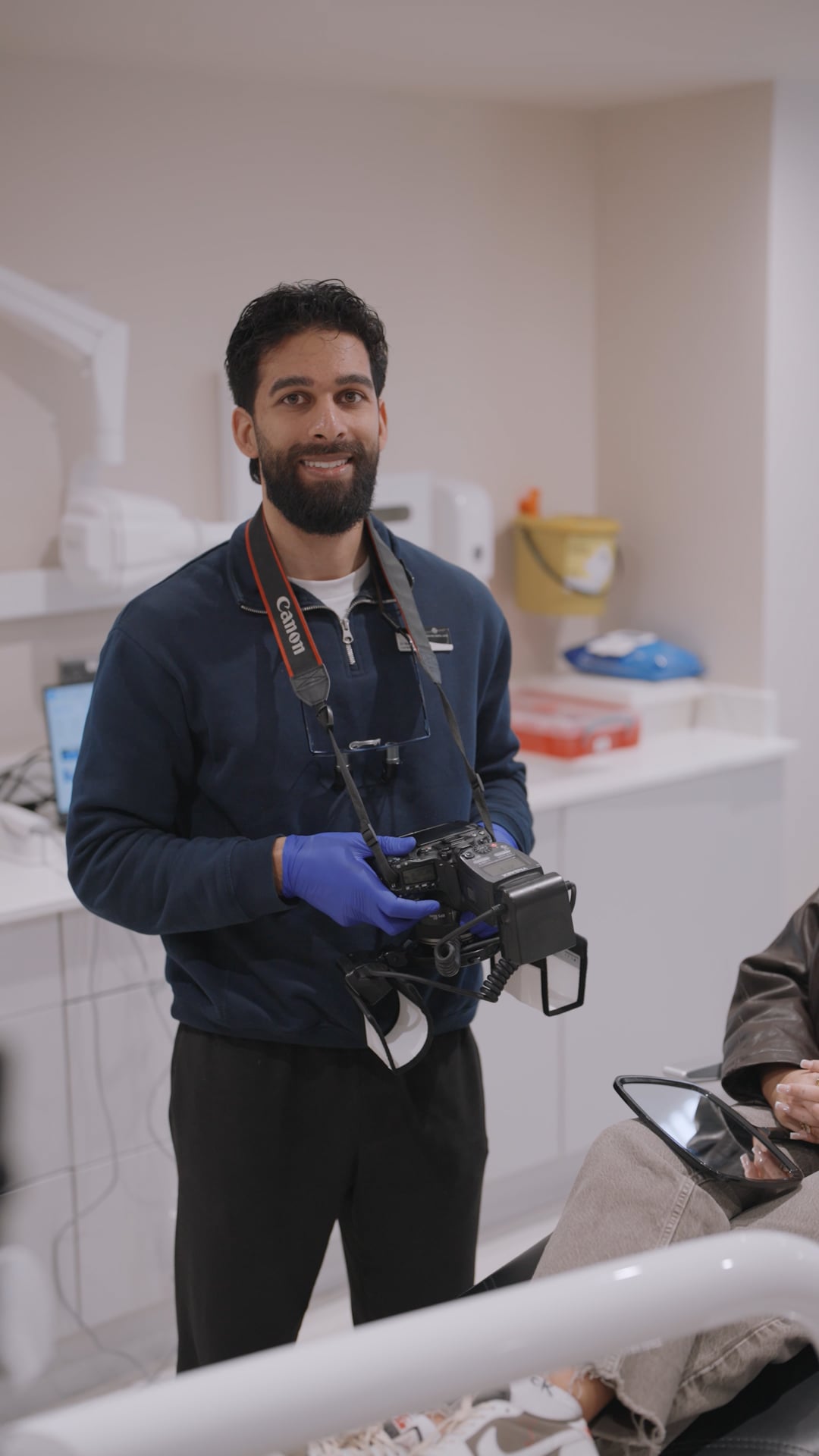
What is Nanofill composite bonding?
Dr Mahesh explains the procedure
Nanofill composite bonding is exclusive to your local Yorkshire Dental Suite clinics. Dr Mahesh is just one of the GDC registered dentists trained to create your new Nanofill smile.
Alternatives to composite bonding
Is composite bonding right for me?
Compare treatments
Compare composite bonding, veneers and crowns
| Feature | Composite bonding | Porcelain veneers | Dental crowns |
|---|---|---|---|
| Cost | £365 per tooth | £895 per tooth | £895 per tooth |
| Procedure time | 1-4 hours | 1-7 hours | 1-7 hours |
| Treatment lasts | Up to 5 years | Up to 15 years | Up to 20 years |
| Pain | None | None with sedation | None with sedation |
| Material | Nanofill™ | Porcelain | Porcelain |
| Can be whitened | No | No | No |
| Preserves teeth | Yes | No | No |
Composite bonding FAQs
Your questions answered
We’ve done our best to answer all of your questions but, if we haven’t, please get in touch. We’d love to help.
This treatment is one of the fastest and most affordable ways to completely refresh your smile.
- Faster than whitening: Takes hours not days
- Cheaper than veneers: Save almost 50%
- More convenient compared to aligners and braces
As it is a cosmetic treatment, composite bonding is not available on the NHS.
Yes, on mild malocclusions composite bonding is an effective way of covering crooked teeth. Moderate malocclusions can in some situations be covered but require IPR to permanently alter teeth, reducing the prominence of any protruding edges. It is not a recommended treatment for severe and complex cases of crowding.
The composite is still bonding to the tooth for 24–48 hours after your procedure. During this time we recommend limiting your diet to soft foods.
After a few days you should be able to eat normally with the exception of avoiding any hard, crunchy or sticky foods which could damage your composite work.
To preserve the whiteness of your new teeth avoid tomato and berry-based drinks and foods which can discolour your teeth.
While you can technically have composite bonding with receding gums we do not recommend it. It would lead to a smile filled with unusually long teeth.
Gum grafts cost from £850 and can be added to your treatment finance plan.
- Adds bulk to your mouth: Composite is added on top of your teeth with no enamel removal. This can make them feel unnatural for a few days until your mouth adjusts to the experience
- Limited lifespan: Composite veneers last half as long as porcelain
- Watch what you eat: Composite is not as robust as porcelain and can be dislodged from you teeth. This can mean making choices that accommodate your teeth such as avoiding hard, crunchy or sticky food
- Cannot be whitened: The resin used is non porous and cannot be whitened using gels, pastes, light treatments, powders, strips or natural whitening methods
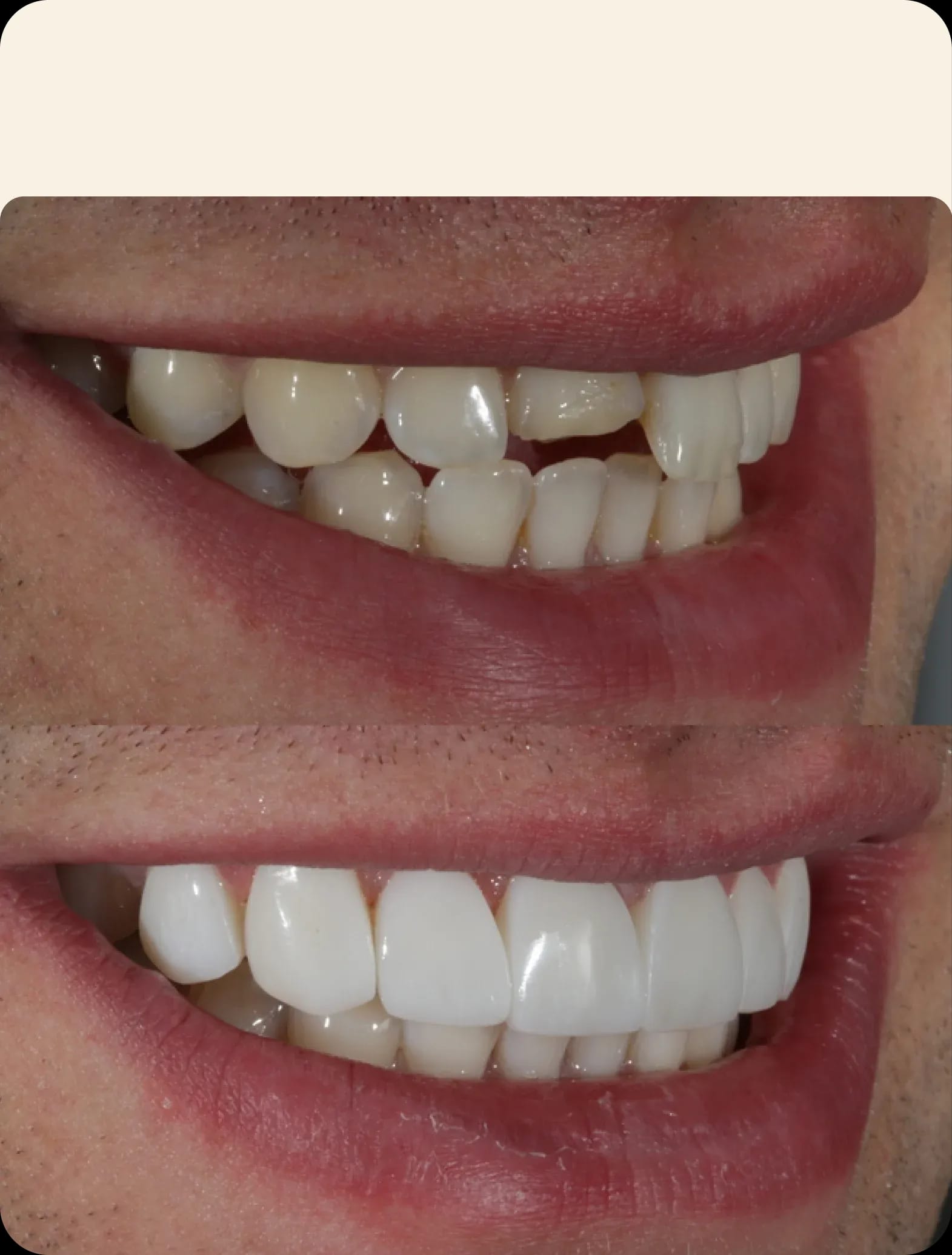
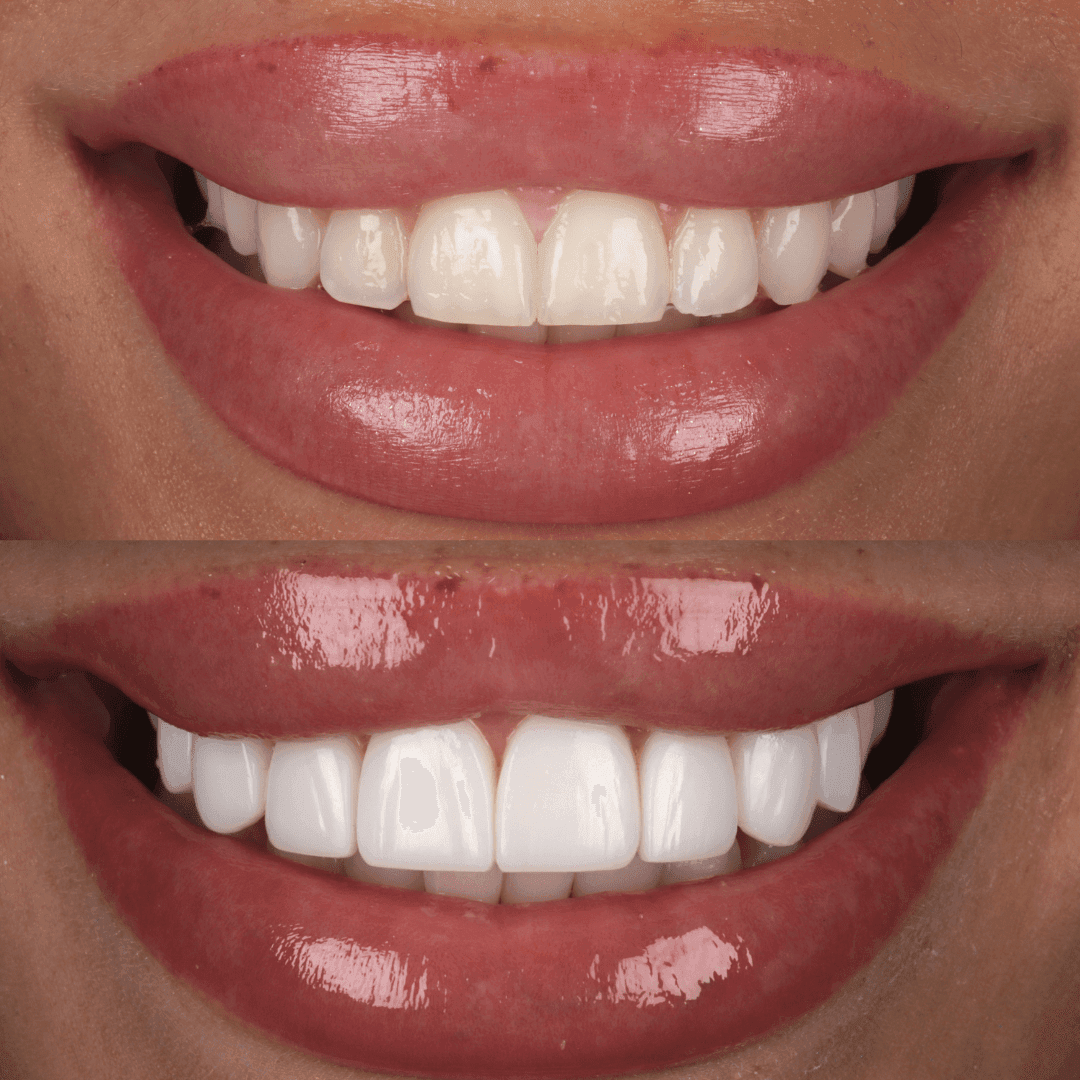
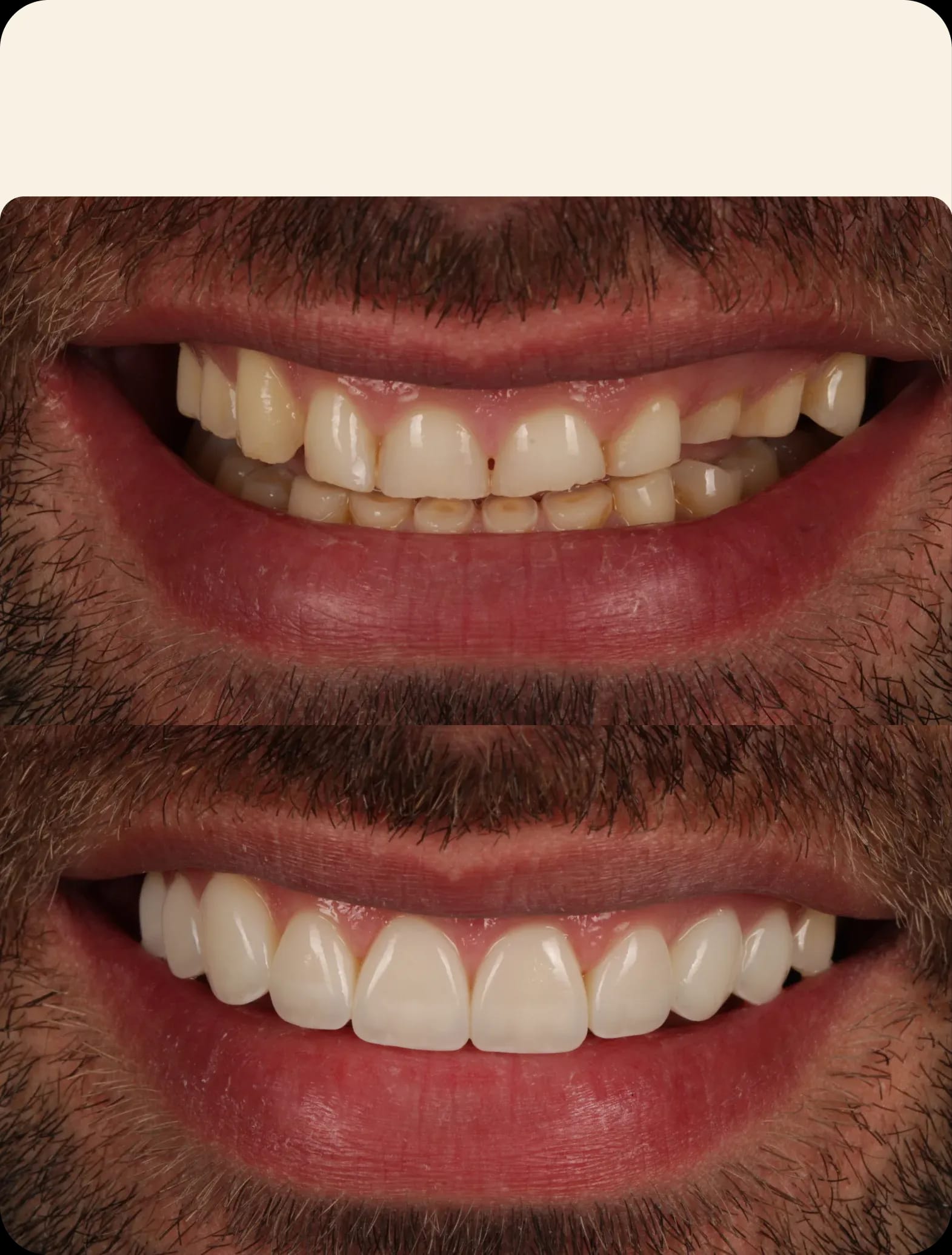
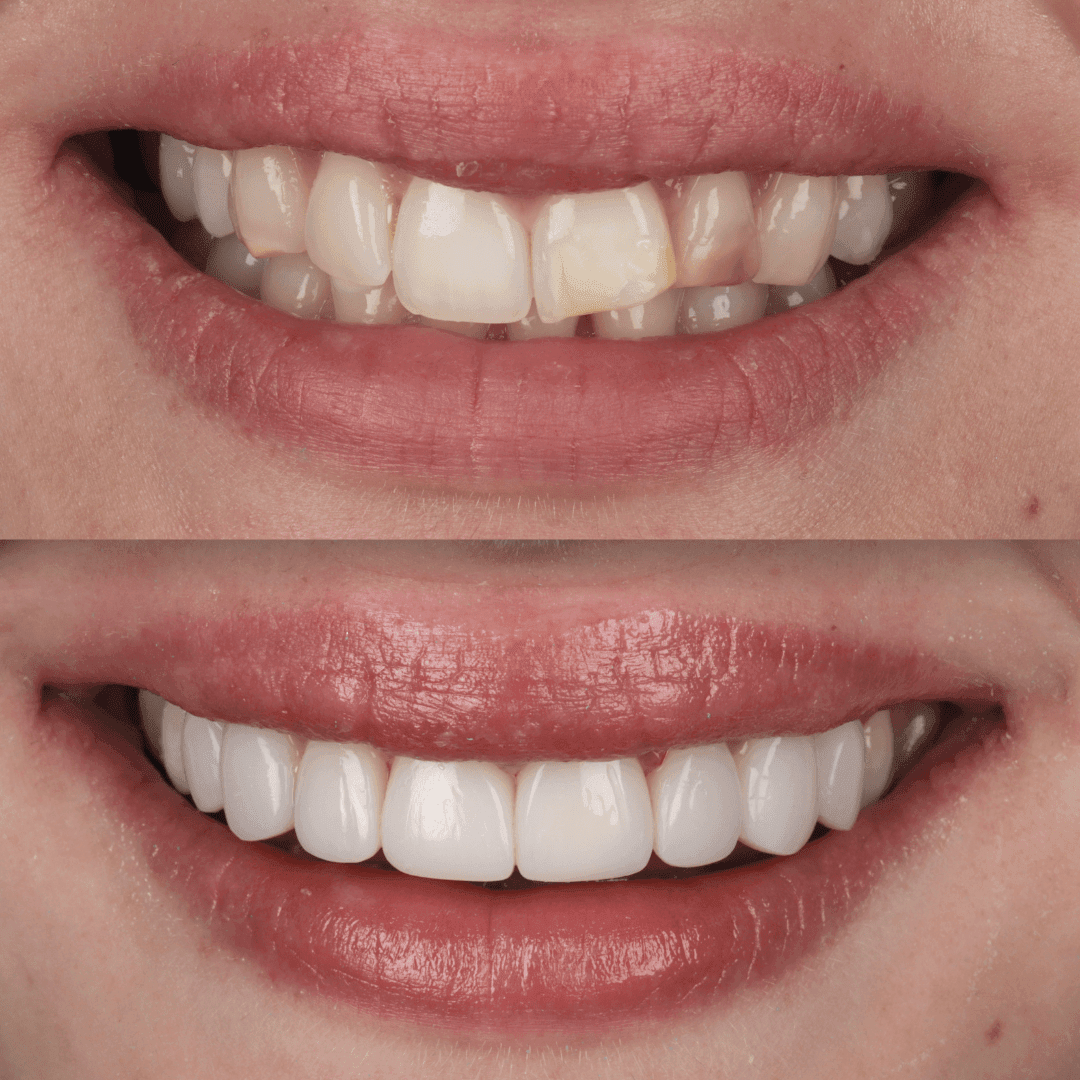
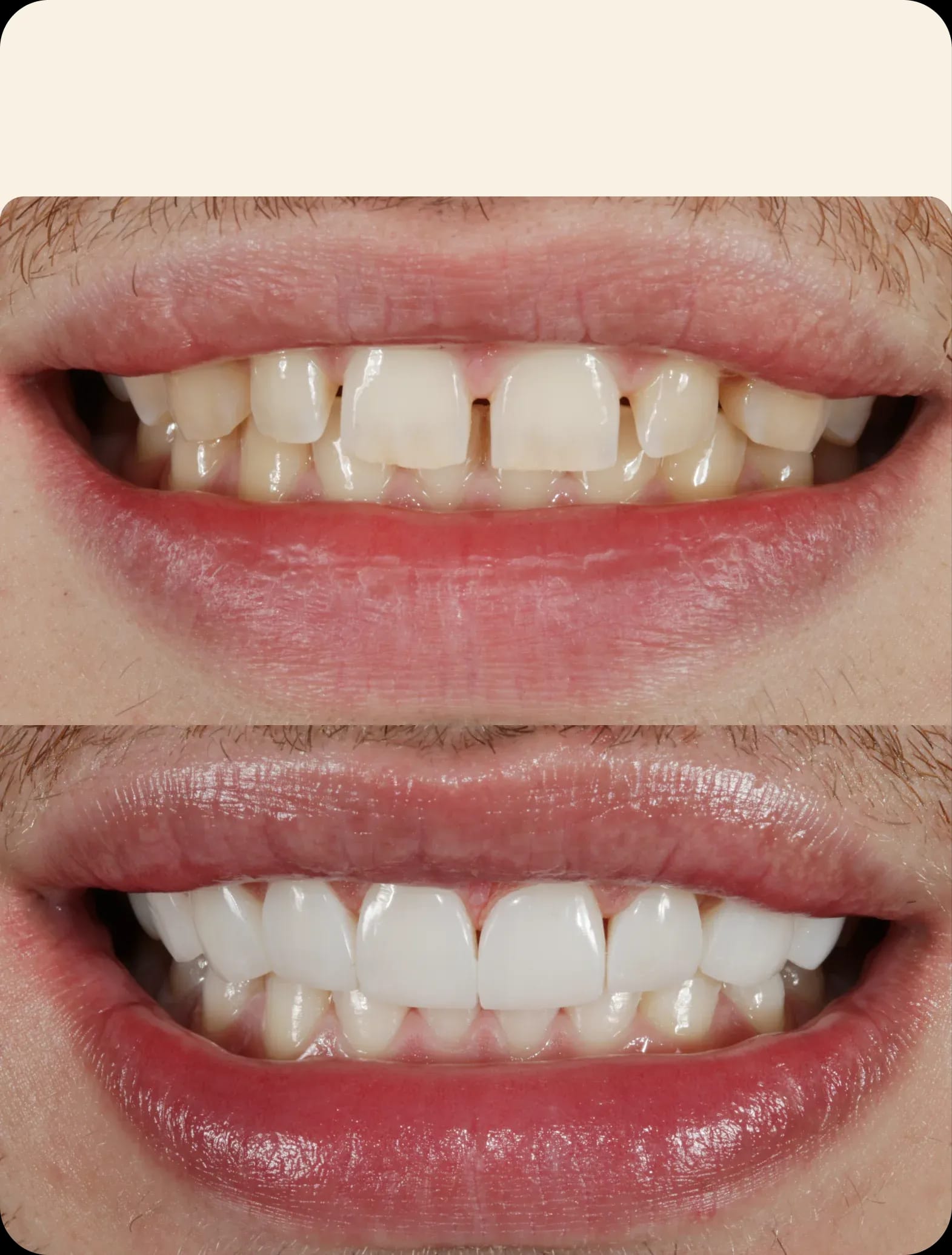
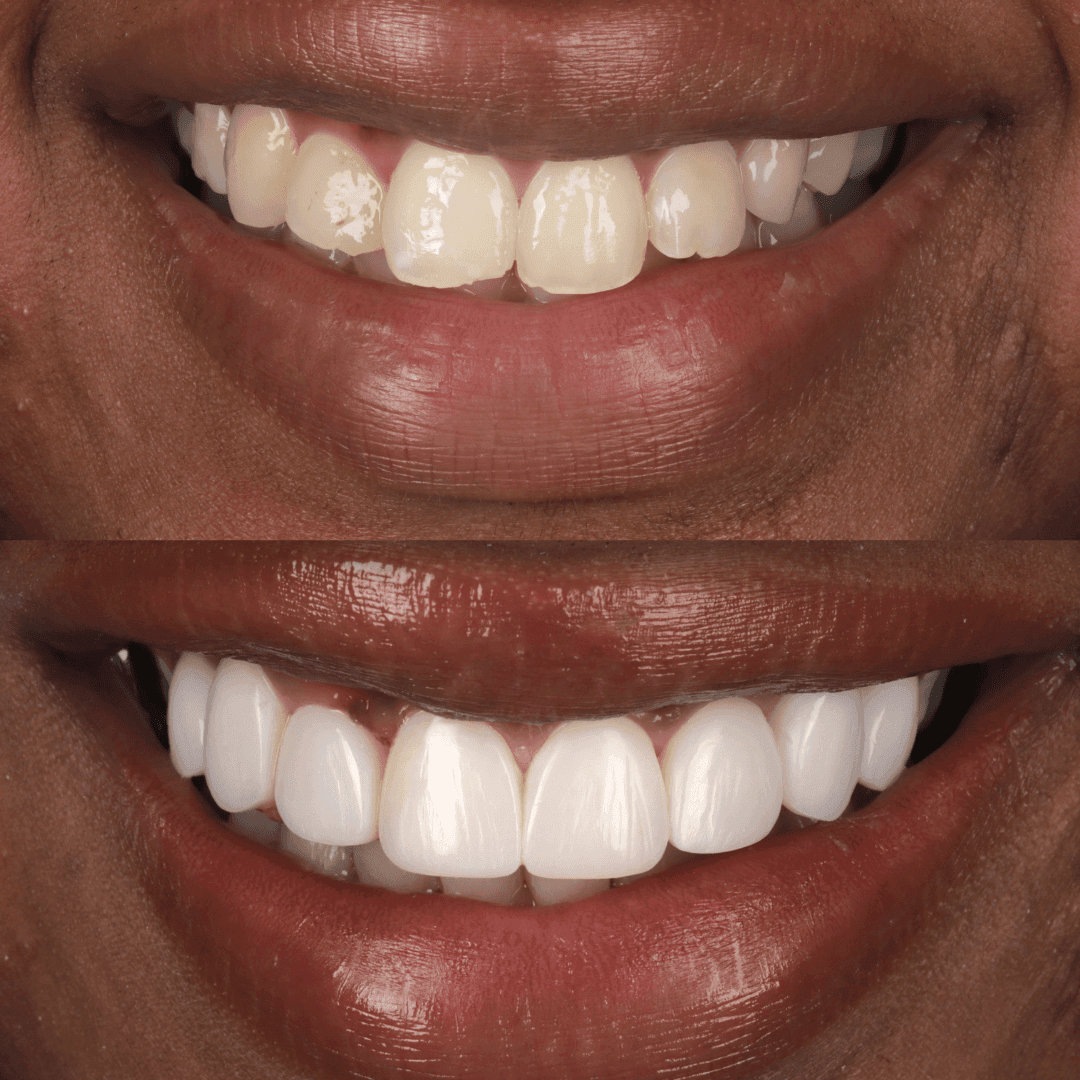
Composite bonding before and after pictures
From smile tweaks to major makeovers
See how Nanofill Composite Bonding® has completely transformed the smiles of our patients.
Meet your cosmetic dentists
Perfecting teeth, one smile at a time
With over 200 dental professionals spanning 9 clinics nationwide, join the 1000s of patients who trust Yorkshire Dental Suite to create a confident smile that lasts.

Dr Rajen Nagar
Lead Cosmetic Dentist

Dr Rushaine Smith
Cosmetic Dentist

Dr Lee Redpath
Cosmetic Dentist
Find composite bonding near me
An experience like no other
Our 9 nation-wide cosmetic dental clinics provide a luxury experience unlike any other. From a warm welcoming reception to state-of-the-art treatment rooms, keeping you relaxed and comfortable is just the start.

Yorkshire Dental Suite Leeds
347 Oakwood Lane, Leeds LS8 3HA
Where it all began. The flagship. State-of-the-art suites and a team who know smiles inside out.
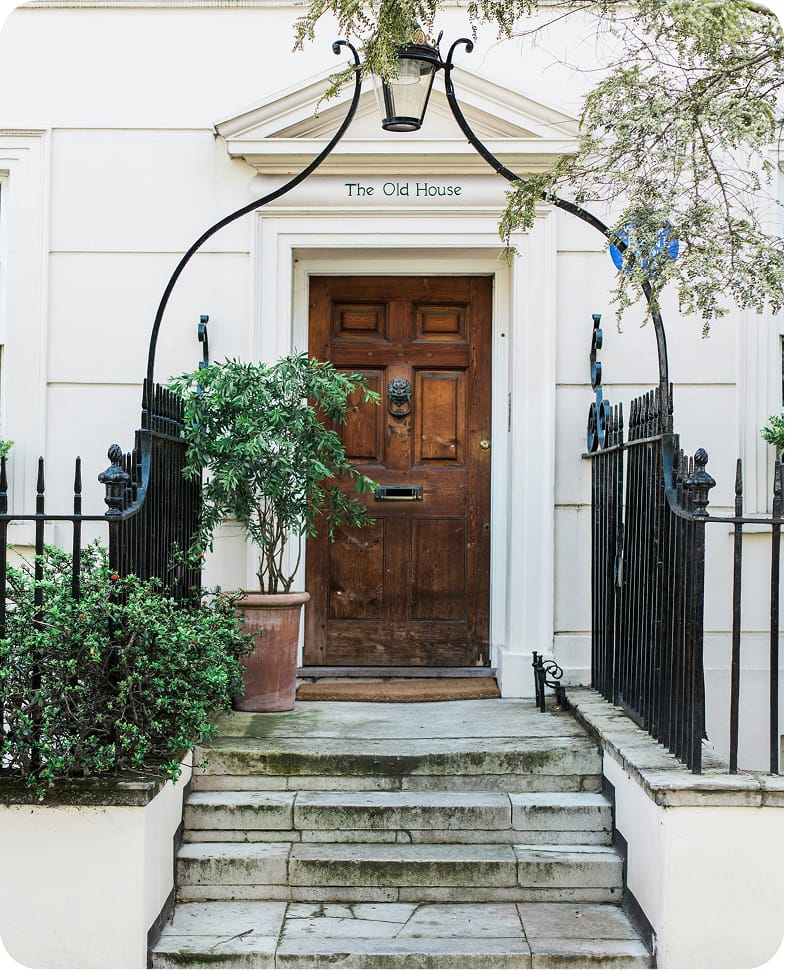
Yorkshire Dental Suite London
82 Chelsea Manor Street, Chelsea, London SW3 5QJ
Smile design in one of London’s most stylish districts. This is the art of dentistry.

Yorkshire Dental Suite Birmingham
679 Pershore Road, Selly Oak, Birmingham B29 7NY
Cutting-edge dentistry in the heart of the Midlands. Trademark precision, new postcode.

Yorkshire Dental Suite Liverpool
32 Bixteth Street, Liverpool L3 9UH
Modern smiles, Merseyside energy. Expert clinicians. Effortless care.

Yorkshire Dental Suite Manchester
535 Barton Lane, Eccles, Manchester M30 0HY
Our newest Northern hub. Advanced cosmetic dentistry with trademark YDS warmth.

Yorkshire Dental Suite York
25 Haley's Terrace, Clifton, York YO31 8SB
Premium smile transformations, hand-crafted in one of the UK’s most beautiful historic cities.

Yorkshire Dental Suite Hull
22 The Weir, Hessle, Hull HU13 0RU
Expert care, by the coast. Precision dentistry with Yorkshire charm.

Yorkshire Dental Suite Wakefield
12 Westgate, Wakefield WF1 1JY
Home to our specialist implant team and a community of patients who’ve found their confidence again.

Yorkshire Dental Suite Guiseley
2 Leeds Road, Guiseley LS20 9NA
You’ll find our newly refurbished dental clinic right in the heart of Guiseley.
Featured in





The brand patients trust
Rated 5 stars from 7,000+ Google reviews
Omg the staff go above and beyond to make you feel comfortable about your treatment I'm so looking forward to my journey. X

zoey Francis
outstanding staff amazing people who make you feel so comfortable and relaxed frim reveption, evie, and the dental staff ... Highly recommend this company and my new smile

Michelle Cutajar
Can't wait to start with my treatment. Amazing service the doctor was very honest and professional.thanks so much I should be contacted Yorkshire Dental suite sooner.

Beauty

Nicola Tyrer

Robert Knaggs
I have never felt so at ease. From the consultation to discussing a treatment plan everyone that I came across were super friendly and completely honest in what would work for me or not. Ellie in particular was amazing, so friendly and you genuinely felt like she really cared about your treatment and reasons behind this! My partner even ended up booking treatment as well! I can’t wait for my treatment date!

Shauner Ash
Very friendly. Excellent service.

Chris
Excellent service from lydia angela liv and dr samme

Joan Bynon

Josh Wheldrake
Outstanding service and support from all staff , felt welcome from the whole team and really looking forward to starting my treatment.

Jackson Black
Perfect

jacob whale
Absolutely perfect service, quick and efficient.

Abrar Ahmed
It was nice and good hospitality

Sneha Reddy

Bsnsbdb Hzhabd
I was late and they were very understanding. Lovely place with lovely people. Highly recommend

Stephen Caines Cook
Great practice! Dr Zain was very gentle and explained everything very well and thoroughly. The manager Pedro also very helpful, friendly and communicative. Receptionist was also very friendly! Xx

Bethany Goode
Accepting patients
How can we help you today?
Proud Members of

Ready to smile?
Every smile tells a story. Let’s make yours one to remember. From everyday confidence to life-changing transformations, it all starts here.