I Need Orthodontic Treatment – What Are My Options?
Teeth straightening is a specialty of Yorkshire Dental Suite. Our team of GDC-registered specialists are able to transform your smile in as little as four months – enquire now.
There are many types of orthodontics available to patients, meaning it can be difficult to know where to start. To help you make an informed decision, we have identified the different treatments available, how they work and when results are typically expected.
What is an orthodontist?
These specialists have taken extra qualifications in the field of orthodontics to become experts in teeth and jaw irregularities. In the UK, both dentists and orthodontists can straighten teeth – however, orthodontists have a deeper understanding of dental anatomy, and are specifically trained to treat very complex alignment issues.
What do orthodontics treat?
Orthodontics address a wide range of malocclusions (misalignments). Whether it’s problems with your bite or an aesthetic issue you feel self-conscious of, teeth straightening treatments are a great way to restore your confidence. These are the common issues orthodontics treat:
Orthodontic issue | Explanation |
When the top teeth overlap the bottom teeth. | |
When the bottom teeth overlap the top teeth. | |
A combination of overbite and underbite across multiple teeth. | |
The teeth protrude out from the jaw. Also known as ‘buck teeth’. | |
Top and bottom teeth do not meet when your jaws are closed. | |
Teeth are spaced unevenly, causing visible spaces. | |
Teeth are pushed together, giving them a crooked appearance. |
Treatment option 1: Clear aligners
Clear aligners fit the modern lifestyle. Designed to be worn for 22 hours per day, these removable trays allow you to eat, drink, exercise and brush your teeth without restriction. Plus, they are almost invisible in the mouth.
Fact file:
- Suitable for: Kids, teens and adults
- Treats: Bite issues and mild, moderate, complex and severe malocclusions
- Results: 4 – 6+ months
- Visibility: Almost invisible
- Removable: Yes
- Available on the NHS: No
- Price: From £1,495
- To progress treatment: Move to the next aligner set in your plan
Treatment option 2: Metal braces
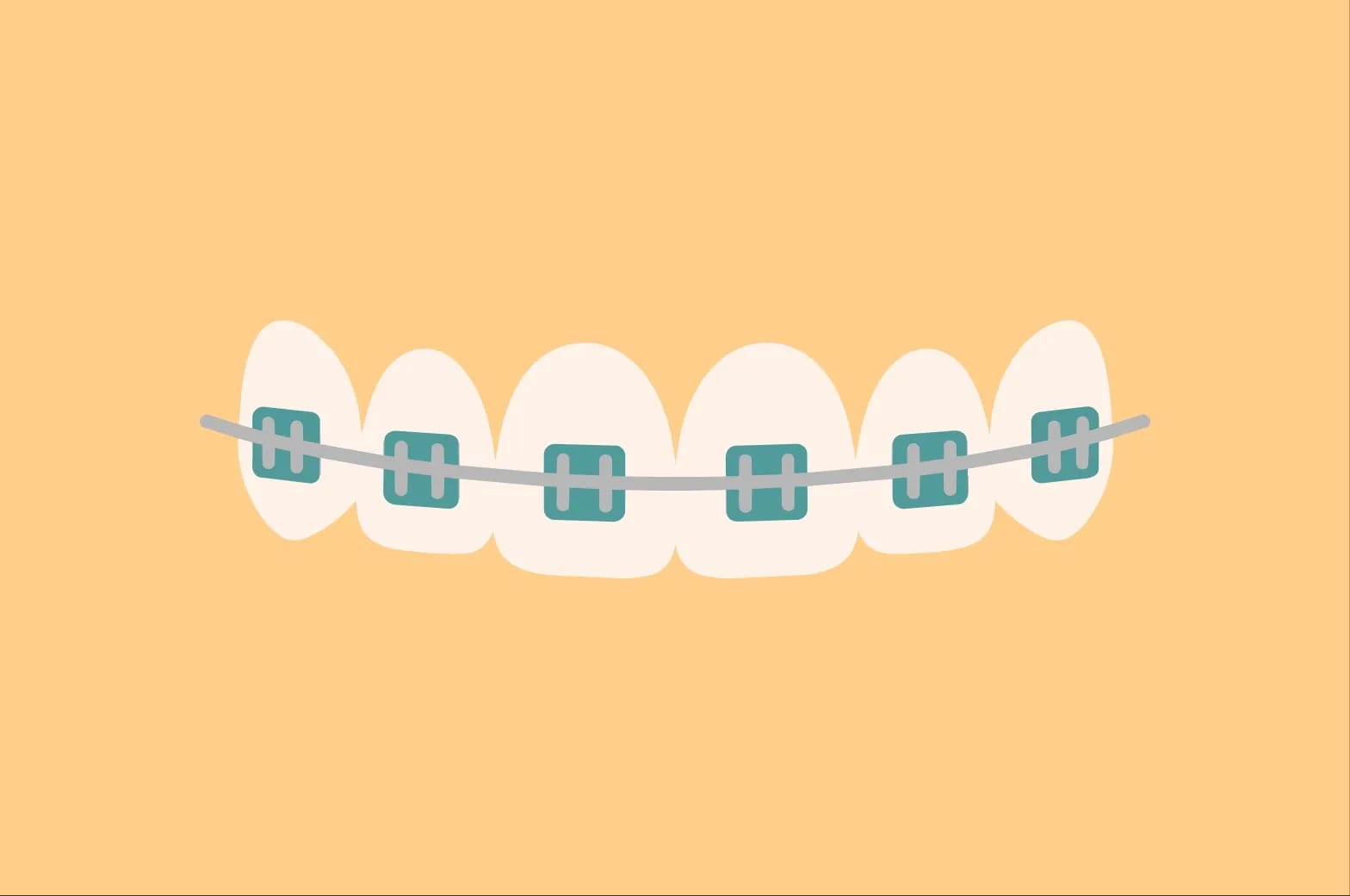
For many, train-track metal braces are the first thing that comes to mind when thinking about teeth straightening. While extremely effective at correcting malocclusions, metal braces are very visible in the mouth.
Fact file:
- Suitable for: Kids, teens and adults
- Treats: Bite issues and mild, moderate, complex and severe malocclusions
- Results: 8 – 12+ months
- Visibility: Very visible
- Removable: No
- Available on the NHS: Yes, free for under 18’s
- Price: From £2,995
- To progress treatment: A dentist tightens the wires
Treatment option 3: Ceramic braces
A more subtle alternative to metal braces, ceramic braces use tooth-coloured wires and frosted brackets to discreetly straighten teeth. Unlike its metal counterpart, this procedure is not available on the NHS.
Fact file:
- Suitable for: Kids, teens and adults
- Treats: Bite issues and mild, moderate, complex and severe malocclusions
- Results: 8 – 12+ months
- Visibility: Discreet
- Removable: No
- Available on the NHS: No
- Price: From £2,995
- To progress treatment: A dentist tightens the wires
Treatment option 4: Lingual braces
Nicknamed ‘invisible braces’, lingual braces work the exact same way as other fixed appliances – however, they are instead attached to the tongue-side of the teeth. This means they are completely hidden from view.
Fact file:
- Suitable for: Kids, teens and adults
- Treats: Bite issues and mild, moderate, complex and severe malocclusions
- Results: 8 – 12+ months
- Visibly: Completely hidden from view
- Removable: No
- Available on the NHS: No
- Price: From £2,995
- To progress treatment: A dentist tightens the wires
Treatment option 5: Self-ligating braces
Self-ligating braces are another type of fixed appliance that use a built-in mechanism to secure the wire to the teeth. This is instead of elastic ties, which helps to reduce friction between the wire and bracket.
Fact file:
- Suitable for: Kids, teens and adults
- Treats: Bite issues and mild, moderate, complex and severe malocclusions
- Results: 8 – 12+ months
- Visibility: Material dependent
- Removable: No
- Available on the NHS: No
- Price (UK average): From £2,000
- To progress treatment: A dentist tightens the wires
Treatment option 6: Orthodontic surgery
Orthognathic surgery is only recommended for more extreme cases. Your dentist may suggest surgery to fix skeletal problems that affect the ability to chew, bite and speak, for example, an extreme underbite. If this is the case, you will need to seek the assistance of private medical care.
Extra orthodontic appliances
Your dentist may recommend using one (or more) of these orthodontic devices while undergoing treatment to give you the results you want. Rest assured, this will be discussed with you during your initial consultation with Yorkshire Dental Suite.
- Palatal expander: Sits across the roof of your mouth. Pushes teeth outwards to better fill your jaw.
- Space maintainers: Preserves the gap left by a missing tooth. More common in child orthodontics.
- Headgear: Attaches to wired braces in order to aid tooth movement and jaw alignment.
- Elastics: Hooking onto brace brackets, these rubber bands apply additional force.
- Retainers: Designed for long-term use once treatment has finished, retainers stop your teeth from moving back.
- TMJ () splints: A removable appliance that helps to reduce strain on the jaw and muscles.
NHS vs private orthodontics – which should I choose?
Both NHS and private dental clinics provide orthodontic treatments to patients, but there are many factors to take into consideration before choosing which practice you go to for your smile. We have compared the key factors below.
| NHS clinic | Private clinic |
Price | Free for under 18’s, or Band 3 (£332.10) for adults | £1,500 and £8,000 (UK). Finance often available |
Treatment options | Limited resources, offer metal braces only | Wide range of treatments to choose from |
Waiting list | Up to 18 weeks | Same and next-day appointments |
Appointment availability | Also limited, often affects work/school schedule | Out of hours appointments available |
Eligibility | Only given to those with a clinical need (IOTN 4 – 5) | Almost everyone is eligible for treatment |
While the NHS is significantly cheaper, you may not be deemed eligible – there is also a longer waiting list, and you are limited to metal braces only. You have more treatment options at a private clinic and will be seen to much quicker. So, there is no right answer – you should choose the practice that suits your individual needs.
Conclusion:
Book a consultation with Yorkshire Dental Suite to get your teeth straightening journey started. With nine clinics located across the UK, you are never too far from one of our GDC-registered dentists.